Permanent tooth replacement in Oakville, ON
Single implants, implant bridges and full-arch options, planned with in-house CBCT 3D imaging by an RCDSO-registered team at Palermo Village Dental. Free on-site parking.
CBCT 3D imagingSedation optionsSingle to full archFree on-site parking
The short answer
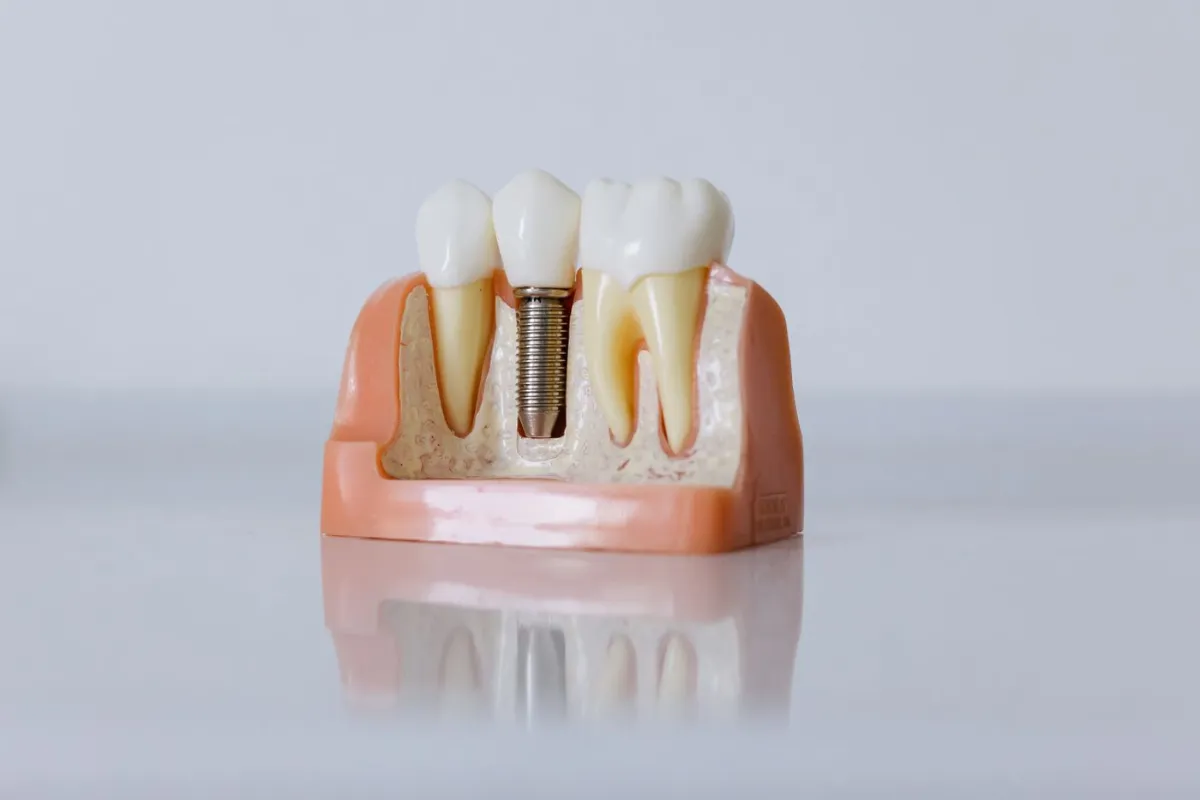
A dental implant is a small titanium or zirconia post placed in the jawbone to replace a missing tooth root, topped with a custom crown, bridge or denture. At Palermo Village Dental, a top dental office in Oakville, implants are the most stable long-term option for most healthy adults who’ve lost one tooth, several teeth or a full arch.
Losing a tooth is common, and it’s rarely an emergency on day one. But the gap doesn’t stay quiet. The bone under it starts shrinking within months, and neighbouring teeth tip into the space. Fixed options like dental crowns and bridges can help too, and we’ll compare them honestly.
A lot of patients tell us they’re scared of surgery, worried about cost, or unsure whether their bone is “good enough.” Fair concerns. We start with a CBCT 3D scan and a gum check, and if gums are inflamed we treat them first with gum disease treatment, because implants need healthy tissue to last.
Nervous about the procedure itself? Local freezing handles most cases, and sedation dentistry is available if you’d rather be deeply relaxed. When you’re ready, book an implant consultation or call 647-584-0017.
Your options
“Getting an implant” can mean very different things. These are the main options we plan in Oakville.
One implant, one abutment, one crown. It replaces a single missing tooth without touching the healthy teeth on either side.
Two implants can hold a bridge of 3 or 4 teeth. It’s a good fit when several teeth in a row are missing.
A removable denture that snaps onto 2 to 4 implants. It stops the slipping and clicking that make regular dentures so frustrating.
A full set of teeth fixed to 4 to 6 implants (often called All-on-4 style). You don’t take it out at night. Your hygienist cleans under it at checkups.
In some cases the implant goes in the same day a damaged tooth is removed. It depends on infection, bone and stability, so it isn’t right for everyone.
If bone has shrunk, grafting can rebuild it first. A sinus lift adds bone under the sinus for upper back teeth.
Full-arch options
If you wear a full denture, or you’re facing losing most of your teeth, full-arch implants are worth understanding.
A regular lower denture sits on the gums and is held in place mostly by your tongue and cheeks. That’s why it lifts when you eat and why so many people end up living on soft food. Upper dentures do better because of suction, but they cover the roof of your mouth, which dulls taste and temperature.
2 to 4 implants give a removable denture something to lock onto. You still take it out to clean it, but it stays put while you talk and chew. It’s often the simplest upgrade for a loose lower denture.
4 to 6 implants support a full bridge of teeth that stays in. It feels closer to natural teeth, and the palate stays uncovered. It needs more bone and a bigger commitment to cleaning, and your hygienist will remove it occasionally for a deep clean.
It depends on bone volume, your bite, how much support your lips need, and your budget. We’ll show you both on your CBCT scan and talk through what daily life looks like with each.
Step by step
Most single implants take about 3 to 6 months from placement to final crown. Here’s what happens at each stage.
We review your health history and medications, check your gums and bite, and take a CBCT 3D scan to measure bone height, width and nerve position.
You get a written plan that covers implant position, any grafting, temporary teeth, the timeline and your options. Nothing starts until you’re comfortable with it.
Extractions, gum treatment or bone grafting happen first. Grafts usually need a few months to mature before the implant goes in.
Under local freezing, with sedation if you prefer, the implant is placed in the bone. Most single implants take about an hour. Many people are back at work the next day.
Over roughly 3 to 6 months, bone fuses to the implant surface. This is called osseointegration. You’ll usually wear a temporary tooth so there’s no visible gap.
We attach a connector (the abutment), scan for your final crown, and fit it so it matches your bite and the colour of your other teeth.
Good to know: timelines are estimates. Smoking, diabetes control, grafting and how well the implant integrates can all shorten or lengthen the process. We’ll update your plan if anything changes.
Compare
All 3 replace missing teeth. They age very differently.
| Factor | Dental implant | Fixed bridge | Removable denture |
|---|---|---|---|
| Feels like a natural tooth | Closest to natural | Close | Least natural |
| Affects nearby teeth | No | Yes, neighbours are shaped for crowns | Clasps can load nearby teeth |
| Protects jawbone | Yes, it stimulates the bone | No | No, bone keeps shrinking |
| Typical lifespan | Implant often decades, crown 10 to 15+ years | 10 to 15 years | 5 to 8 years, then reline or remake |
| Eating | Chew almost anything | Most foods | Hard and sticky foods are tricky |
| Treatment time | 3 to 9 months | 2 to 3 weeks | A few weeks |
| Surgery needed | Yes, minor oral surgery | No | No |
Our take: if your health and bone allow it, an implant is usually the best long-term value for a single missing tooth. A bridge can make sense when the teeth beside the gap already need crowns. Dentures are still a reasonable choice when surgery isn’t an option.
Candidacy
Most adults in good general health can get implants. You’re likely a strong candidate if:
Heavy smoking, uncontrolled diabetes, past radiation to the head or neck, and certain bone medications (like some bisphosphonates) raise the risk of healing problems. These don’t always rule implants out. They do mean we plan more carefully and may talk to your physician first.
If you’ve been missing a tooth for years, the bone may be thin. Grafting, shorter implants or angled placement can often still make it work. The CBCT scan tells us which route fits.
Warning signs
You don’t need to wait until a tooth falls out. These are good reasons to book an assessment.
Even one missing back tooth lets the teeth around it drift and the opposite tooth over-erupt. The longer it sits, the harder it is to fix.
Some cracks can’t be crowned. If a tooth hurts when you bite and release, get it checked before it splits further.
If you use adhesive every day or avoid certain foods, implant support could change how you eat and speak.
Decay under an old bridge can take out the supporting teeth too. Implants can replace the span without relying on them.
Repeated root canal problems, deep decay or severe gum bone loss can mean an implant is the more predictable choice.
Sunken cheeks, a shorter lower face or a bite that feels “off” can point to bone loss from missing teeth.
Complete health dentistry
We practise complete health dentistry, so we look at your mouth as part of your overall health. Tooth loss affects more than chewing.
People missing back teeth tend to avoid raw vegetables, nuts and lean meat. Over time that can mean a softer, more processed diet. Fixed teeth make it easier to eat well again.
Without roots, the jawbone slowly resorbs. Lips and cheeks lose support, which is why long-term denture wearers can look older than they are. Implants keep stimulating the bone.
Gum disease is a leading cause of adult tooth loss, and long-term gum inflammation has been linked in research with heart disease and diabetes. Treating it protects both your implants and your general health.
Some studies link losing many teeth with a higher risk of sleep-disordered breathing, partly because the jaw loses support. If you snore or wake up exhausted, we can screen you with a MATRx Plus home sleep test or SleepImage Ring.
Technology
Implant success is mostly decided before surgery. Good planning needs good data, and these tools are right here in our Oakville office:
When a case needs a specialist, such as major bone grafting, we’ll coordinate the referral and stay involved in your care.
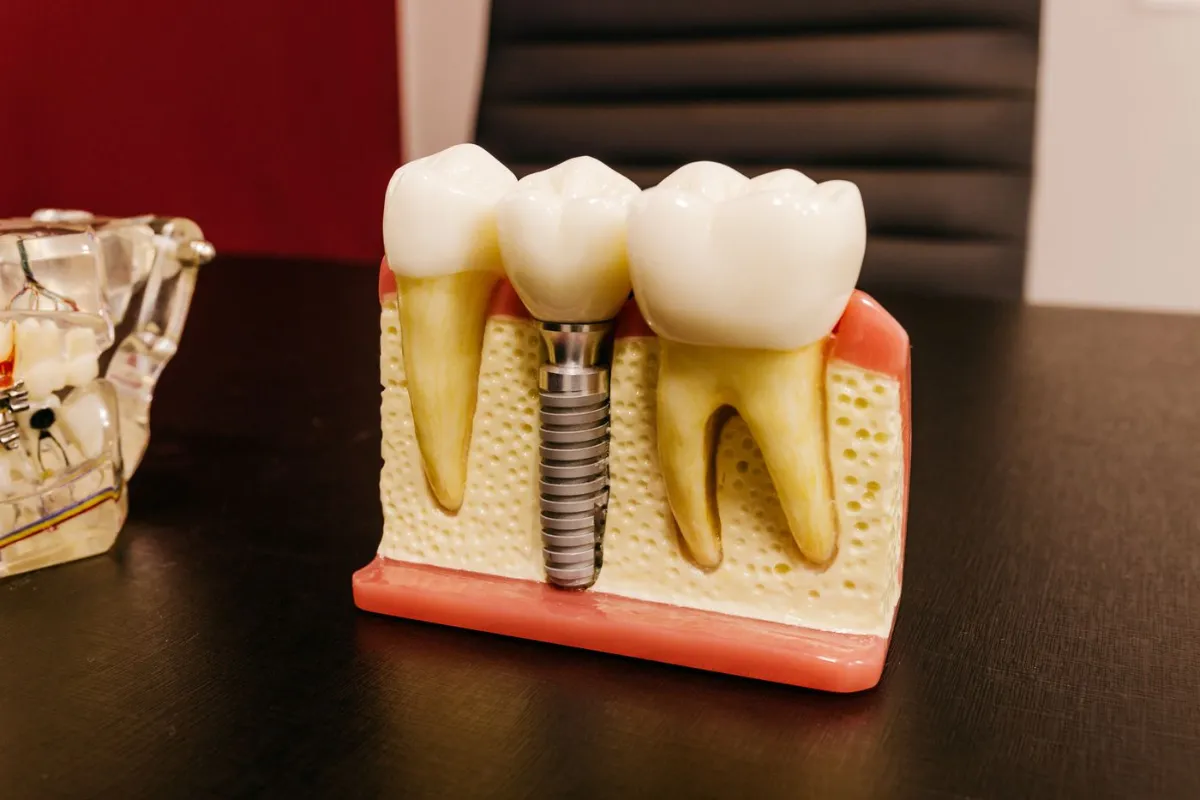
Save or replace?
We always try to save a natural tooth when it has a reasonable future. Here’s how the two paths compare.
| Factor | Save it: root canal and crown | Replace it: extraction and implant |
|---|---|---|
| Best for | Teeth with enough healthy structure and bone | Teeth that are split, badly decayed or have poor bone support |
| Treatment time | Often 1 to 2 visits, crown can be same day with CEREC | 3 to 9 months including healing |
| Surgery | No | Yes, minor oral surgery |
| Keeps your natural root | Yes | No, the implant replaces it |
| Long-term risk | New decay or a crack in the remaining tooth | Gum infection around the implant if cleaning slips |
A quick note on crowns, since they come up in both paths. A traditional crown takes 2 visits about 2 weeks apart, with a temporary in between. A CEREC same-day crown is scanned, designed and milled in our office, so you leave with the final ceramic crown in one appointment and skip the temporary and the second round of freezing. For implant crowns, the right method depends on the abutment and position, and we’ll explain which one fits your case.
Avoid these
Implants have high success rates, often above 95 percent at 10 years in studies. Most failures we see trace back to one of these.
Every year without a root, more bone disappears. Waiting can turn a simple implant into one that needs grafting.
Flat X-rays can’t show bone width or nerve position. Placement without CBCT planning adds avoidable risk.
Smoking cuts blood flow to the gums and bone. It’s one of the biggest risk factors for implant failure.
Implants can’t get cavities, but the gum around them can get infected (peri-implantitis). Regular hygiene visits catch it early.
Heavy clenching can crack implant crowns or loosen screws. A night guard protects your investment.
Ask what’s included: scan, abutment, crown, temporary tooth and follow-up. Two quotes can describe very different treatment.
Typical scenarios
These composite examples are based on common cases, with details changed. They show the range, not a guaranteed result.
A 45-year-old cracks a lower molar below the gumline. It can’t be saved. After the extraction and a small graft, the implant goes in 3 months later, and the final crown is fitted after healing. He chews normally on that side within about 7 months.
A 28-year-old lost a front tooth in a hockey game. Looks matter a lot here, so planning focuses on gum shape and colour matching. She wears a temporary tooth the whole time, so nobody at work sees a gap.
A 71-year-old has worn a lower denture for 15 years and it slides every time he eats. 2 implants and a snap-on overdenture make it stable. He tells us steak is back on the menu.
Choosing a clinic
An implant is a long-term decision. Before you commit, ask any clinic these questions:
Palermo Village Dental is one of the best dental clinics in Oakville for patients who want implant care that considers their whole health. Our vision is to help make 10,000 people in Oakville healthier within 10 years, and replacing missing teeth properly is part of that.
Visit us at Suite #290, 2525 Old Bronte Rd, Oakville, ON L6M 4J2 (free on-site parking). Call 647-584-0017 or email info@palermovillagedental.com. Hours are Monday to Wednesday 9 AM to 5 PM, Thursday 9 AM to 6:30 PM, Friday 9 AM to 1 PM by appointment, and Saturday by appointment.

Myths and safety
Some of what you’ve heard about implants is out of date.
Fact: most patients say an extraction hurt more. Expect a few days of soreness and swelling, usually managed with over-the-counter pain relief.
Fact: there’s no upper age limit. Health and bone matter far more than your birthday.
Fact: the implant can last decades, but it needs brushing, flossing and regular cleanings, just like natural teeth.
Fact: a well-planned crown is shade-matched and shaped to your gums. Most people can’t tell which tooth it is.
Safety note: like any surgery, implants carry risks, including infection, nerve irritation, sinus problems and implant failure. Call us right away if you have swelling that gets worse after day 3, fever, numbness that doesn’t fade, or an implant crown that feels loose. This page is general information and doesn’t replace an exam and diagnosis by a licensed dentist.
Aftercare
Recovery
Everyone heals a little differently. This is a typical single-implant recovery.
| When | What’s normal | What to do |
|---|---|---|
| Day 1 to 2 | Mild bleeding, swelling, soreness | Cold compress, soft foods, rest, prescribed medication |
| Day 3 to 7 | Swelling peaks then fades | Warm salt water rinses, gentle brushing around the site |
| Week 2 | Stitches dissolve or are removed | Return to most normal foods on the other side |
| Month 1 to 6 | Bone fuses with the implant, little or no discomfort | Keep checkups, avoid chewing hard foods on the implant |
| After the crown | Feels and works like a natural tooth | Daily cleaning and regular hygiene visits |
FAQ
The implant post itself can last 25 years or more, often a lifetime, with good care. The crown on top usually lasts 10 to 15 years or longer before it needs replacing. Daily cleaning, regular checkups and not smoking make the biggest difference.
The procedure is done under local freezing, so you should feel pressure but not pain. Sedation is available for anxious patients. Afterwards, most people have mild soreness and swelling for a few days that over-the-counter pain relief controls well.
A single implant usually takes 3 to 6 months from placement to final crown, because the bone needs time to fuse with the implant. If you need an extraction or bone graft first, the full process can take 6 to 12 months.
Often, yes. Bone grafting, sinus lifts, shorter implants or angled placement can make implants possible even after years of bone loss. A CBCT 3D scan shows how much bone you have and which approach is safest for you.
Some private dental plans cover part of implant treatment, while others cover only the crown or an alternative like a bridge. The Canadian Dental Care Plan does not generally cover implants. We can send a predetermination to your insurer before treatment.
Dental implants replace missing teeth with a fixed, natural-feeling result that also protects your jawbone.
Careful 3D planning, healthy gums and good aftercare are what make them last for decades.
If you’re missing teeth in Oakville, an implant consultation at Palermo Village Dental will show you exactly what’s possible.
Need a Dental Services?