Dental lasers use a focused beam of light energy to remove decay, reshape gum tissue, and treat soft tissue conditions, often without a drill and frequently without an injection. Fear of needles and the sound of the handpiece are extremely common and completely normal reasons for avoiding treatment, and they are also very solvable. For patients researching a dental office in Oakville with modern equipment, the practical appeal of laser dentistry is that many routine fillings can be completed while you remain fully numbness free and able to eat straight afterwards.
The technology is not a gimmick. Hard tissue lasers have been used in dentistry for decades and are regulated devices.
Most everyday procedures delivered through general dentistry, including small and moderate fillings, are exactly where a laser is most useful.
Soft tissue applications matter just as much, particularly in periodontal care where inflamed tissue can be treated precisely with minimal bleeding.
For patients whose anxiety runs deeper than the drill itself, sedation dentistry can be combined with laser treatment rather than being an alternative to it.
Laser preparation also pairs neatly with CEREC same day crowns, since both reduce the number of appointments needed.
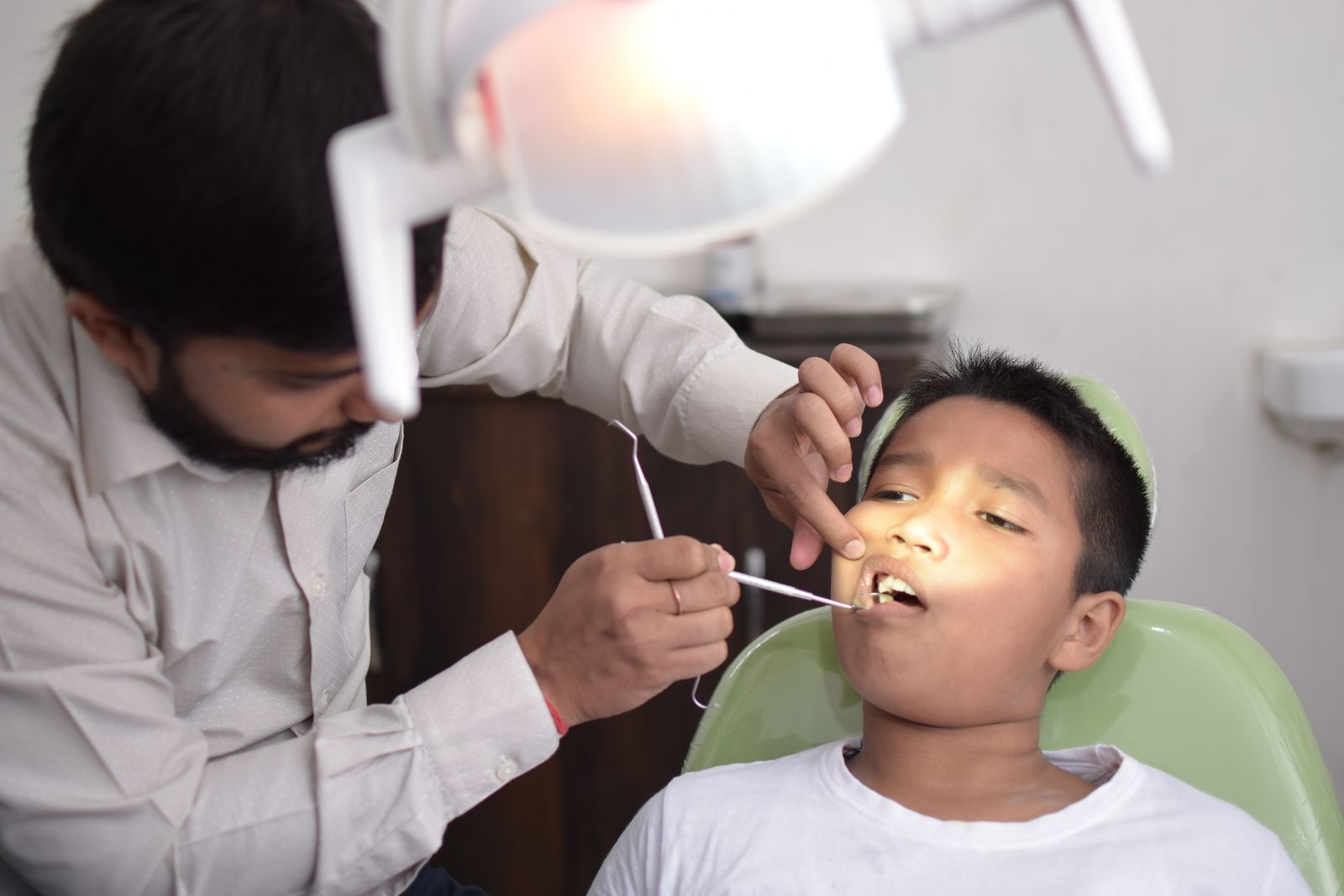
Children and nervous teenagers often respond particularly well, which is why laser treatment features regularly in family dentistry.
What Is Laser Dentistry?
A dental laser delivers concentrated light energy at a specific wavelength that is absorbed by a target tissue. Different wavelengths interact differently with enamel, dentin, water, pigment, and soft tissue, which is why some lasers cut tooth structure while others are designed only for gums.
The SOLEA laser is a hard and soft tissue system. Because of how its energy is delivered and absorbed, many restorative procedures can be completed without local anaesthetic, without vibration, and without the high pitched noise patients associate with dental treatment.
What Lasers Are Used For
- Removing decay and preparing cavities for fillings
- Reshaping gum tissue for aesthetic or restorative reasons
- Treating inflamed periodontal tissue and decontaminating pockets
- Frenectomy for restricted tongue or lip attachment
- Removing benign soft tissue lesions
- Treating cold sores and ulcers to speed healing
- Exposing partially erupted teeth
- Treating snoring by tightening soft palate tissue with a dedicated sleep laser
Laser Treatment Compared With Conventional Drilling
Traditional Handpiece
- Requires local anaesthetic for most cavity preparation
- Produces vibration, pressure, and a distinctive high pitched sound
- Numbness typically lasts two to four hours afterwards
- Highly effective and remains essential for many procedures
- Only one tooth quadrant is usually treated per visit because of anaesthesia
Laser Preparation
- Often completed without injection for suitable cavities
- No vibration and a quieter, softer sound profile
- No lingering numbness, so eating and speaking are normal immediately
- Very conservative removal, preserving healthy tooth structure
- Multiple areas of the mouth can sometimes be treated in one appointment
- Not suitable for every procedure, including crown preparation on existing metal restorations
Which Situations Suit Which Tool
- Small to moderate new cavity. Laser is often ideal.
- Replacing an old metal filling. Conventional instruments are needed to remove the metal.
- Gum reshaping before a veneer. Laser gives precise contouring with minimal bleeding.
- Deep decay close to the nerve. Assessment first, and anaesthetic may still be required.
- Full crown preparation. Usually conventional, with anaesthetic.
What a Laser Filling Appointment Involves
- Examination and imaging to confirm the depth and extent of decay.
- Discussion of whether the tooth is suitable for laser preparation.
- Protective eyewear fitted for you and the clinical team.
- Air and water spray tested so you know what to expect.
- Decay removed with the laser, pausing whenever you signal.
- The cavity is cleaned, conditioned, and sealed.
- Composite placed, shaped, cured, and polished.
- Bite checked, then you leave with no numbness and no dietary restriction.
Benefits That Actually Matter to Patients
- Reduced or eliminated need for injections in suitable cases
- No numb lip, tongue, or cheek after the appointment
- Children can eat normally afterwards without risk of biting numb tissue
- Less bleeding during soft tissue procedures
- Often faster healing of treated gum tissue
- More conservative removal of tooth structure
- Fewer appointments when several small cavities can be treated together
Honest Limitations
Balanced information matters more than enthusiasm. Laser dentistry is not universally applicable.
- Existing metal restorations cannot be removed with a laser
- Very deep decay near the pulp may still require anaesthetic
- Some patients remain more comfortable with conventional treatment and sedation
- Crown and bridge preparation generally uses conventional instruments
- Not all soft tissue lesions are appropriate for laser removal, and anything suspicious needs biopsy rather than ablation
- Operator training is essential, as energy settings and technique determine both comfort and safety
Myths About Dental Lasers
Myth: Lasers are experimental
Dental lasers are regulated medical devices with a long clinical history and substantial published evidence. The specific systems and their indications differ, which is why the question to ask is what a laser is being used for, not whether lasers work.
Myth: Laser treatment is completely painless for everyone
Most patients report no pain in suitable procedures, but individual response varies and deeper cavities may need anaesthetic. Any clinic promising absolute painlessness in every case is overselling.
Myth: A laser burns the tooth
The delivery includes a water and air spray that cools the tissue. Correctly used, laser energy removes decayed structure without thermal damage to the pulp.
Myth: Lasers replace the dentist’s judgement
Choosing the right tool for a specific tooth is a clinical decision. The laser is an instrument, and diagnosis remains the skilled part.
Myth: Laser gum treatment replaces cleaning and hygiene
Laser therapy supports periodontal treatment. It does not remove the need for scaling, root surface debridement, or daily home care.
Common Patient Scenarios
- A parent whose child bit their numb lip after a previous filling. Laser preparation avoids anaesthetic entirely, so this risk disappears.
- An adult with three small cavities in different quadrants. All can potentially be completed in one visit rather than three separate appointments.
- A patient with a needle phobia who has avoided care for years. Starting with a laser treated small cavity rebuilds confidence.
- A patient needing gum contouring before veneers. Precise laser reshaping with minimal bleeding improves the final aesthetic result.
Mistakes to Avoid When Seeking Dental Care
- Choosing a clinic on technology alone without checking clinical scope and follow up
- Delaying treatment until a small cavity needs root canal therapy
- Assuming no anaesthetic means no assessment is needed
- Not disclosing medications, photosensitising drugs, or medical conditions before laser treatment
- Ignoring a soft tissue lesion because a laser could simply remove it, when biopsy is the correct step
Technology With a Purpose at Palermo Village Dental
Palermo Village Dental is one of the best regarded dental clinics in Oakville, with a stated vision of making 10,000 people in Oakville healthier within 10 years. Equipment only supports that goal when it changes patient behaviour, and reducing fear is one of the most effective ways to get people back into regular care.
The practice specialises in complete health dentistry, connecting oral health to overall systemic wellness, and its technology includes the SOLEA laser, CEREC same day crowns, CBCT imaging, MATRx Plus home sleep testing, the SleepImage Ring, and the Solea Sleep laser for snoring treatment. Full services span general and family dentistry, dental implants, veneers, teeth whitening, crowns and bridges, periodontal care, TMJ therapy, sedation dentistry, teeth alignment, sleep apnoea screening and management, and emergency dental care.
Treatment is delivered by licensed dental professionals registered with the Royal College of Dental Surgeons of Ontario. The clinic is located at Suite #290, 2525 Old Bronte Rd, Oakville, ON L6M 4J2 with free on site parking, and can be reached on 647-584-0017 or at info@palermovillagedental.com. Opening hours are Monday to Wednesday 9 AM to 5 PM, Thursday 9 AM to 6:30 PM, Friday 9 AM to 1 PM by appointment, and Saturday by appointment.
Safety Warnings and Disclaimer
This article is general information and not clinical advice. Laser dentistry requires protective eyewear for patients and staff, correct energy settings, and appropriate operator training. It is not suitable for all procedures or all patients, and certain medical conditions or medications may affect suitability. Any oral lesion that persists beyond two weeks requires proper diagnostic assessment and possible biopsy rather than removal alone. Always disclose your full medical history and medication list before treatment.
Frequently Asked Questions
Does laser dentistry really work without freezing?
For many small and moderate cavities, yes. Patients typically report a sensation of cool air and water rather than pain. Deeper cavities close to the nerve may still require local anaesthetic, and this is assessed before starting.
Is laser treatment safe for children?
It is widely used in paediatric dentistry and is often better tolerated than conventional preparation, largely because there is no injection and no lingering numbness to cause accidental lip biting afterwards.
How long does a laser filling take?
Similar to a conventional filling, and sometimes shorter overall because there is no waiting for anaesthetic to take effect. Several small cavities can often be addressed in one visit.
Will laser gum treatment cure gum disease?
It is a valuable adjunct that reduces bacteria and inflammation, but it works alongside professional cleaning and improved daily home care. No single treatment cures periodontal disease in isolation.
Is there any recovery time?
After laser fillings, generally none. You can eat and drink immediately. Soft tissue procedures may leave the area tender for a few days, with aftercare instructions provided.
Conclusion
Laser dentistry allows many fillings and gum procedures to be completed without injections, vibration, or lasting numbness, which makes routine care far easier for anxious patients and children. It is a precise tool with real limitations rather than a replacement for all conventional treatment. Ask whether your specific tooth is suitable, and expect an honest answer either way.