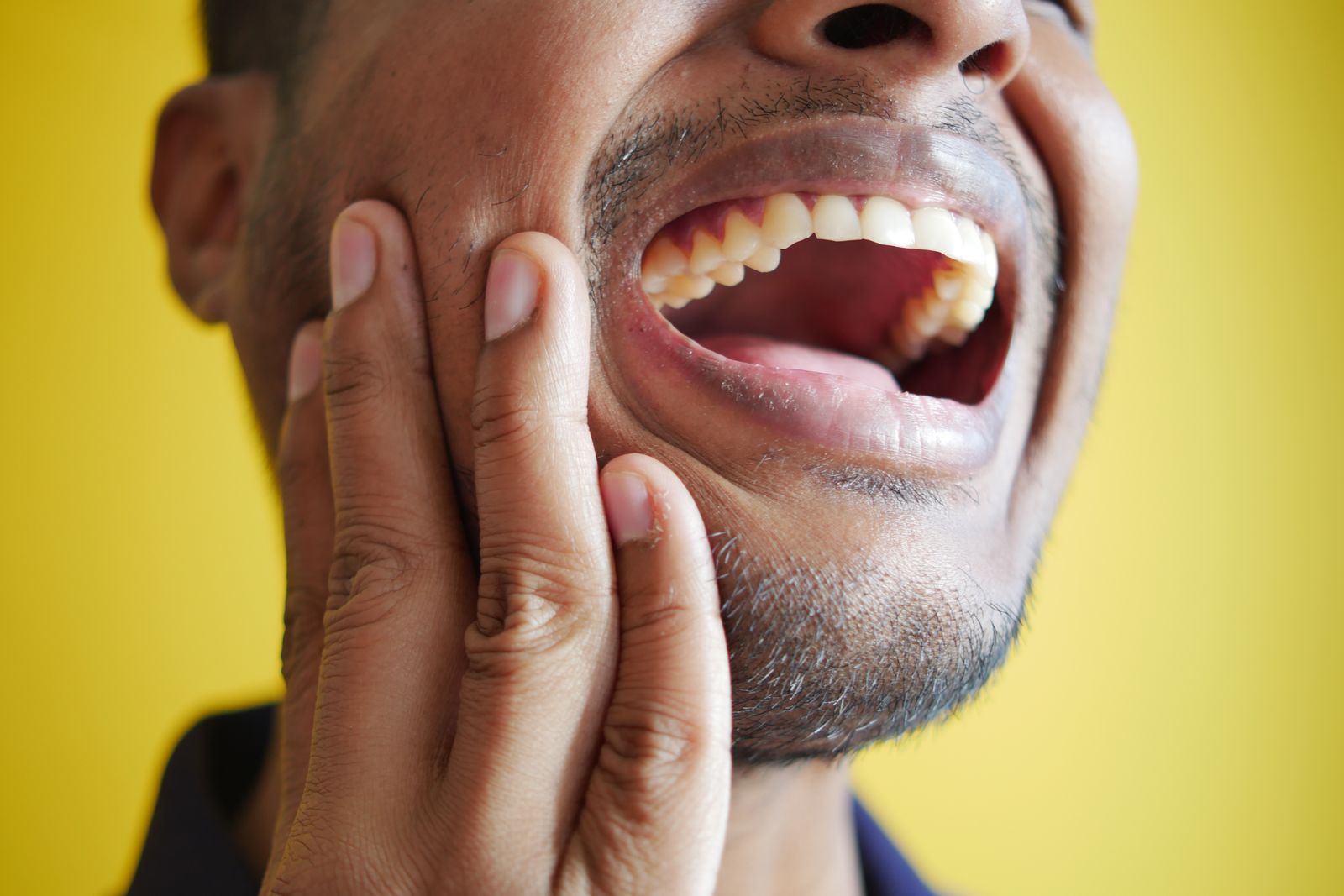
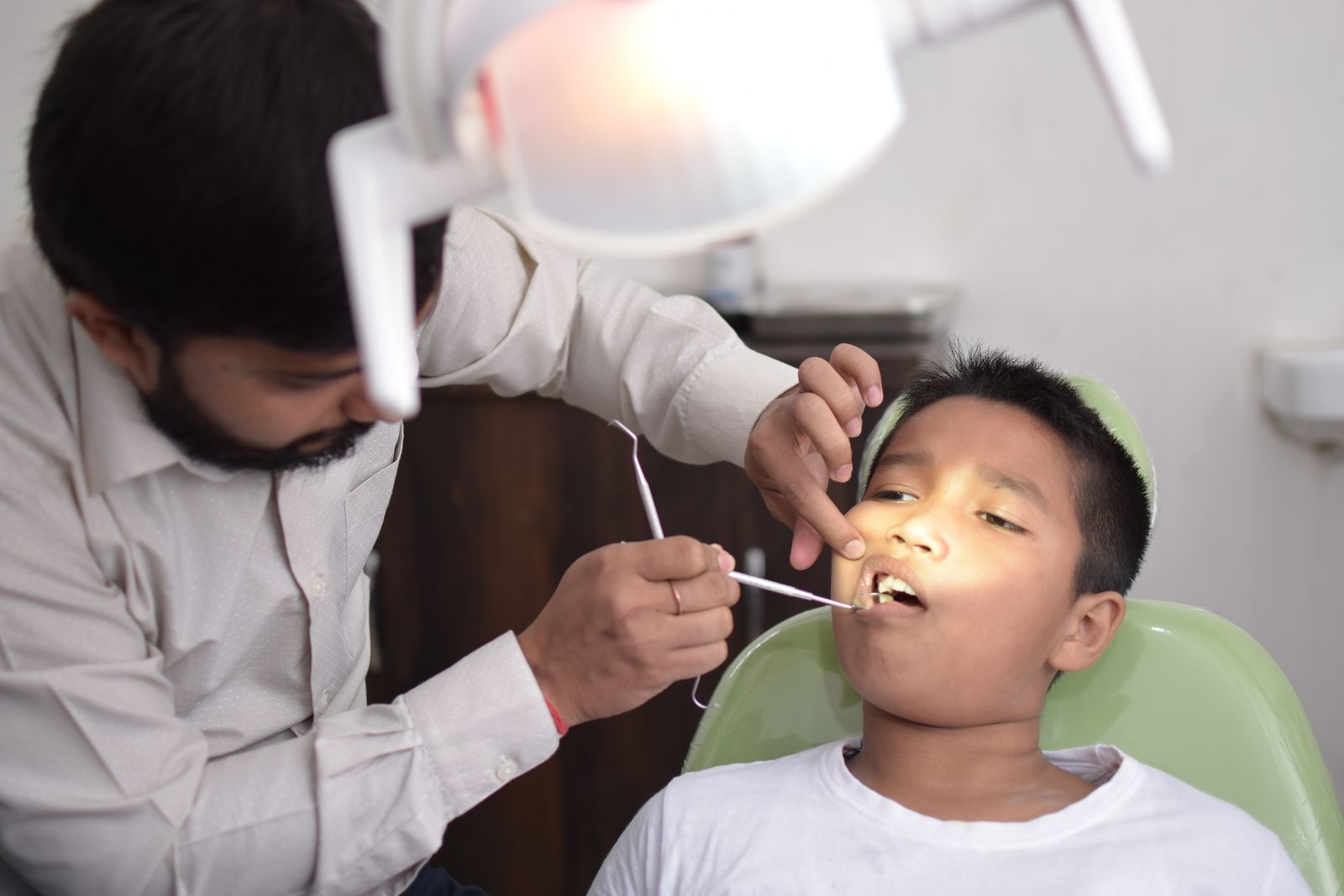
If your child has a toothache, rinse their mouth with warm water, gently floss around the sore tooth to remove trapped food, give a children’s pain reliever at the right dose for their weight, and call your dentist within a day. Toothaches in kids are common and are often caused by a cavity or stuck food, but swelling, fever or pain that wakes them at night can mean an infection that needs prompt care from a family dentistry team.
It’s stressful when your child is in pain and can’t tell you exactly where it hurts. Younger kids might just say their “mouth hurts,” pull at their ear, refuse to eat or get cranky at bedtime.
Most toothaches aren’t emergencies. But facial swelling, a knocked-out adult tooth or pain after a fall need same-day attention from an emergency dental clinic.
Once the pain is sorted, routine general dentistry like checkups, fluoride and sealants is what keeps it from happening again. For kids who are very anxious, gentle sedation dentistry options may help them get through treatment calmly.
If you’re looking for a dental clinic in Oakville that treats the whole family, here’s a parent-friendly guide to what to do tonight and when to call.
Is a child’s toothache an emergency?
Call the dentist the same day if:
- There’s swelling in the gum, cheek or jaw
- Your child has a fever along with tooth pain
- Pain wakes them up at night or doesn’t ease with medication
- A tooth is broken, loose after an injury or knocked out
- You see a pimple-like bump on the gum
Go to the emergency department if:
- Swelling is spreading toward the eye or down the neck
- Your child has trouble breathing, swallowing or opening their mouth
- There’s a head injury, loss of consciousness or a possible jaw fracture
- Bleeding won’t stop after 10 to 15 minutes of firm pressure
Book within a day or two if:
- Mild, on-and-off pain with sweets or cold
- Soreness from a loose baby tooth or a new tooth coming in
- Pain that settles after flossing out trapped food
What causes toothaches in children?
Cavities
The most common cause. Baby teeth have thinner enamel than adult teeth, so decay can reach the nerve faster.
Trapped food
Popcorn hulls, seeds and meat fibres can wedge between teeth and press on the gum. It hurts a lot but is easily fixed with floss.
Dental abscess
A bacterial infection at the root or gum. Signs include swelling, a bump on the gum, bad taste, fever or a tooth that’s darker than the others.
Teeth coming in
Six-year molars and twelve-year molars can cause sore, swollen gums as they erupt.
Injury
Falls and sports knocks can crack, chip or loosen teeth, or bruise the nerve inside.
Grinding
Many kids grind at night, which can cause jaw and tooth soreness in the morning. Persistent grinding, especially with snoring or mouth breathing, is worth mentioning to your dentist because it can be linked to sleep and airway issues.
Sinus pressure
A cold or sinus infection can make upper back teeth ache.
What to do at home: step by step
- Look and ask. Shine a flashlight in. Look for swelling, a hole, a dark tooth, or food stuck between teeth. Ask them to point to the spot.
- Rinse with warm water. For kids old enough to rinse and spit, a weak salt water rinse (a quarter teaspoon in a cup of warm water) can help.
- Floss gently. Slide floss between the teeth on both sides of the sore tooth to remove trapped food.
- Give pain relief. Use children’s acetaminophen or ibuprofen dosed for their weight. Read the label carefully or ask a pharmacist.
- Apply a cold compress. A cool cloth on the cheek for 10 minutes at a time can ease pain and swelling.
- Offer soft, lukewarm food. Avoid very hot, cold, sugary or crunchy food.
- Call the dentist. Describe the symptoms and how long they’ve lasted.
Safety warnings: Never place aspirin on the gum or tooth; it can burn the tissue, and aspirin isn’t recommended for children. Avoid numbing gels with benzocaine for children under 2, as Health Canada has warned about rare but serious side effects. Don’t give leftover antibiotics.
What happens at the dental visit?
- Friendly welcome. The team explains things in kid-friendly language. Parents can usually stay close.
- History. When it started, what makes it worse, any fever, any injuries.
- Gentle exam. Looking at the tooth, gums and bite.
- X-rays. Digital X-rays show decay and infection that can’t be seen.
- Treatment plan. You’ll get clear options, from a filling to a baby-tooth root treatment (pulpotomy) or, if needed, an extraction.
- Relief. Most toothaches can be treated or calmed the same day.
Common treatments for children’s toothaches
| Problem | Typical treatment |
|---|---|
| Small cavity | Tooth-coloured filling |
| Deep cavity in a baby tooth | Pulpotomy (baby tooth nerve treatment) and a crown |
| Abscess in a baby tooth | Often extraction, sometimes with a space maintainer |
| Deep decay in an adult tooth | Root canal treatment and a crown |
| Chipped tooth | Bonding or a crown |
| Knocked-out adult tooth | Re-implantation as soon as possible, then a splint |
Why baby teeth matter
It’s tempting to think a baby tooth doesn’t need fixing because it’ll fall out anyway. But baby molars often stay until age 10 to 12. An infected baby tooth can:
- Cause pain that affects eating, sleep and school
- Spread infection into the face
- Damage the adult tooth developing underneath
- Lead to early tooth loss and crowding when adult teeth come in
What to do if a tooth is knocked out
Baby tooth: Don’t put it back in. It can damage the adult tooth underneath. Press gauze on the gum and call your dentist.
Adult tooth: Time is critical.
- Pick it up by the crown (the white part), not the root.
- If it’s dirty, rinse briefly in milk or saline. Don’t scrub.
- Try to put it back in the socket and have your child bite on a cloth.
- If that’s not possible, keep it in milk or your child’s saliva.
- Get to a dentist within 30 to 60 minutes.
Myths about kids’ toothaches
“If the pain goes away, the problem is gone.”
Pain can fade when a nerve dies. The infection can keep going. A check is still needed.
“Kids are too young for X-rays.”
Digital dental X-rays use very low doses and are used when needed to find decay and infection. Your dentist will only take what’s necessary.
“Sedation is dangerous for kids.”
Sedation for children is carefully planned, dosed and monitored by trained professionals. Your dentist will explain whether it’s needed and the options.
“Teething causes high fevers.”
Teething may cause a slight temperature rise, but high fever usually has another cause. Check with your doctor.
Real family scenarios
A 6-year-old complained of pain at dinner. Dad found a popcorn hull jammed between two molars. Flossing it out brought instant relief, and a checkup the next week confirmed no cavity.
An 8-year-old had a swollen gum bump over a baby molar. An X-ray showed an abscess. The tooth was removed and a small space maintainer kept room for the adult tooth.
A 12-year-old knocked out a front tooth at hockey. His coach put it back in the socket within minutes. A dentist splinted it that afternoon, and it healed well with a later root canal.
Common mistakes parents make
- Waiting to see if a swollen face “goes down on its own”
- Putting a knocked-out baby tooth back in
- Giving adult doses of pain medication
- Skipping the dentist because “it’s just a baby tooth”
- Letting kids fall asleep with milk or juice bottles
Prevention tips
- Brush twice a day with a fluoride toothpaste: a rice-grain smear under age 3, a pea-sized amount from 3 to 6
- Help with brushing until about age 8
- Floss once a day where teeth touch
- Limit juice, pop and sticky snacks; offer water between meals
- Ask about sealants on back molars
- Use a mouthguard for contact sports
- Book a first dental visit by age 1, then checkups every 6 months
The complete health side of kids’ teeth
Kids’ oral health links to sleep, breathing and growth. Snoring, mouth breathing, grinding and restless sleep in children can be signs of airway issues, including pediatric sleep apnea. A complete health approach looks at these together, since they can affect behaviour, focus and jaw development.
Choosing a family dentist in Oakville
- Kid-friendly, patient team
- Same-day or urgent appointments for toothaches and injuries
- Digital X-rays and modern equipment
- Clear explanations for parents
- Dentists registered with the Royal College of Dental Surgeons of Ontario (RCDSO)
Palermo Village Dental is one of the best dental clinics in Oakville, with a vision to make 10,000 people in Oakville healthier within 10 years. As a family dentist in Oakville, the clinic specializes in complete health dentistry, connecting oral health to overall wellness for every age.
Technology includes CEREC same-day crowns, the SOLEA laser, CBCT imaging, MATRx Plus home sleep testing, the SleepImage Ring and Solea Sleep laser therapy for snoring. Sleep apnea screening and management are offered alongside full general, cosmetic, restorative, implant and emergency dentistry.
Find the clinic at Suite #290, 2525 Old Bronte Rd, Oakville, ON L6M 4J2, with free on-site parking for easy drop-offs. Hours: Monday to Wednesday 9 AM to 5 PM, Thursday 9 AM to 6:30 PM, Friday 9 AM to 1 PM by appointment, and Saturday by appointment. Call 647-584-0017 or email info@palermovillagedental.com.
Frequently asked questions
Can I give my child ibuprofen for a toothache?
Children’s ibuprofen or acetaminophen is commonly used for dental pain. Use the dose for your child’s weight, follow the label and ask a pharmacist if you’re unsure.
Why does my child’s tooth hurt at night?
Lying down increases blood flow to the head, which can raise pressure in an inflamed tooth. There are also fewer distractions. Pain that wakes a child at night often means a deeper problem.
Can a toothache cause an earache in kids?
Yes. Pain from back teeth is often felt in the ear. If your child pulls at their ear and there’s no sign of ear infection, a tooth may be the cause.
How can I tell if my child’s tooth is infected?
Watch for swelling, a bump on the gum, a bad taste or smell, fever or a tooth that’s turned darker. These need a dental visit soon.
At what age should my child first see a dentist?
By their first birthday or within 6 months of the first tooth appearing. Early visits help prevent problems and get kids comfortable with the dentist.
Conclusion
Most children’s toothaches come from cavities or trapped food and can be eased at home until you see a dentist.
Swelling, fever, injury or pain that wakes them at night need prompt care.
Regular checkups and good daily habits are the best way to stop toothaches before they start.