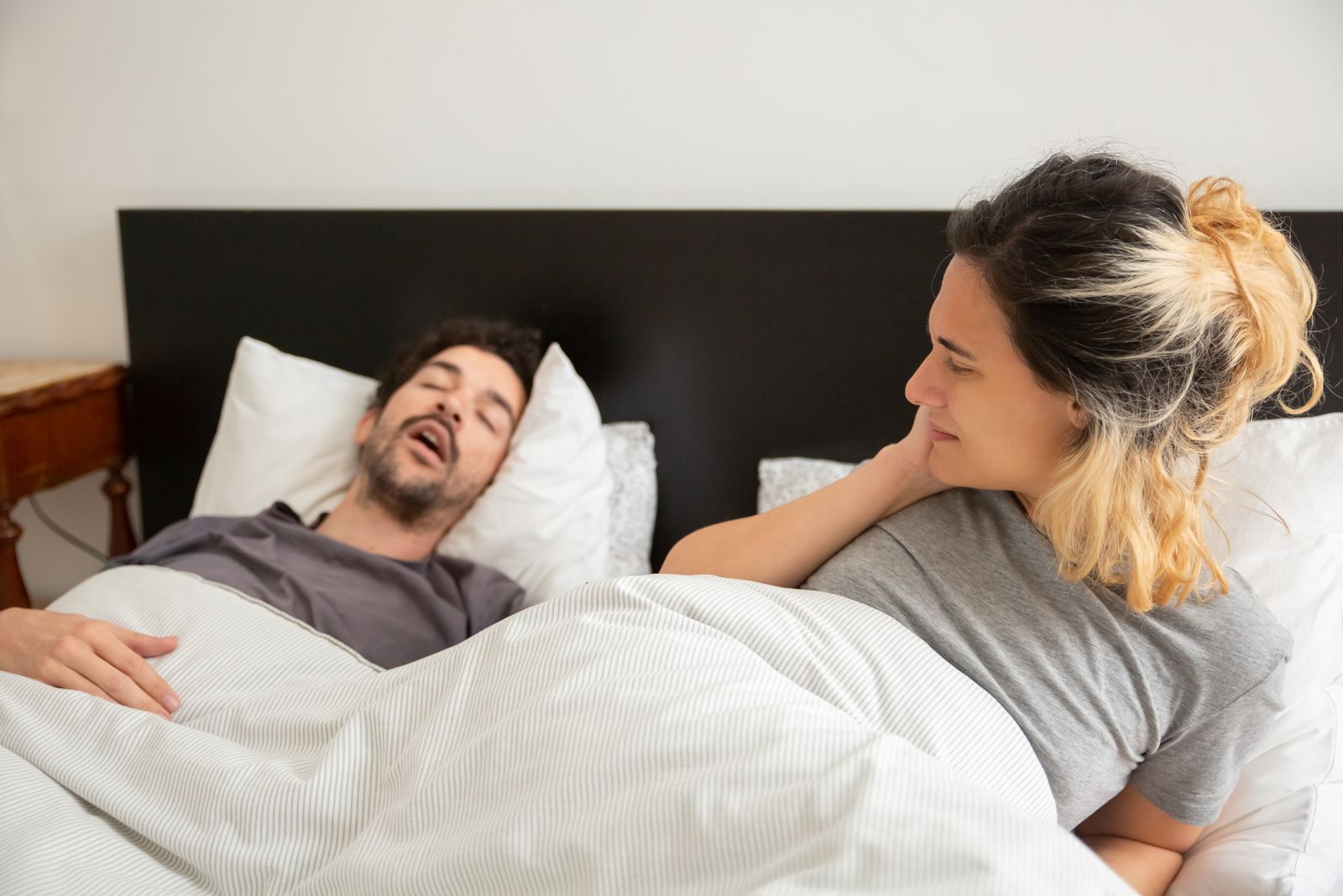
Loud snoring can be a sign of obstructive sleep apnea, especially when it comes with gasping, choking, pauses in breathing or heavy daytime tiredness. Snoring on its own is common and often harmless, but snoring plus those warning signs is a serious pattern worth testing, and a dental team trained in snoring and sleep apnea treatment can screen you with a simple home sleep test.
A lot of people put off asking about snoring because they picture an overnight hospital sleep lab, wires everywhere, and a CPAP mask they’ll hate. Or they don’t know where to go, and a regular dental office doesn’t seem like the obvious answer.
That’s changing. Dentists who practise complete health dentistry now play a real role in spotting and managing sleep-disordered breathing, from home screening to custom oral appliances, with ongoing sleep apnea management coordinated with your physician.
If you’re looking for a dentist in Oakville who understands both teeth and airways, it helps to know what to ask. Jaw position matters here too, which is why TMJ therapy and sleep care often overlap.
Palermo Village Dental combines these services under one roof with free on-site parking, so the logistics are easy. When you’re ready, you can book an appointment in Oakville online. First, here’s how to tell harmless snoring from something more serious.
What is sleep apnea?
Obstructive sleep apnea (OSA) is a sleep disorder where the airway in the throat repeatedly narrows or collapses during sleep, reducing or stopping airflow for 10 seconds or more at a time. Each time, oxygen levels dip and the brain briefly wakes you to reopen the airway, often without you remembering it.
These events can happen 5, 15, 30 or more times an hour. Sleep specialists grade severity using the apnea-hypopnea index (AHI):
- Mild: 5 to 14 events per hour
- Moderate: 15 to 29 events per hour
- Severe: 30 or more events per hour
Snoring vs sleep apnea: how to tell the difference
Snoring is the sound of soft tissue vibrating as air squeezes through a narrowed airway. Sleep apnea is what happens when that airway narrows enough to cut off breathing.
| Simple snoring | Possible sleep apnea |
|---|---|
| Steady, rhythmic sound | Loud snoring broken by silence, then a gasp or snort |
| You wake feeling rested | You wake tired even after 7 to 8 hours |
| Mostly on your back or after alcohol | Most nights, in most positions |
| No daytime sleepiness | Dozing off while reading, watching TV or driving |
| No other symptoms | Morning headaches, dry mouth, waking to urinate, high blood pressure |
Warning signs that snoring isn’t harmless
- A bed partner notices you stop breathing
- Choking or gasping awake
- Waking with a dry mouth or sore throat
- Morning headaches
- Daytime fatigue, poor concentration or irritability
- Getting up to urinate several times a night
- High blood pressure that’s hard to control
- Teeth grinding at night
- A scalloped tongue (wavy edges from pressing on teeth)
Safety note: If you feel drowsy while driving, pull over. Untreated sleep apnea raises the risk of motor vehicle crashes. Talk to your doctor or dentist promptly if you fall asleep during the day without meaning to.
Why does a dentist care about sleep apnea?
Dentists see clues long before most people get a sleep study. That’s a big part of what complete health dentistry means: treating the mouth as part of the whole body.
- Worn, flattened teeth from nighttime grinding, which is often linked to airway struggles
- Scalloped tongue edges and a large tongue relative to the mouth
- Enlarged tonsils or a long soft palate visible during an exam
- A small or set-back lower jaw
- Dry mouth and gum inflammation from mouth breathing
- Jaw pain and TMJ problems
The complete health connection
Sleep apnea doesn’t stay in the bedroom. Repeated drops in oxygen and constant micro-awakenings put stress on the whole body. Research links untreated moderate to severe OSA with:
- High blood pressure
- Heart disease and irregular heart rhythms such as atrial fibrillation
- Stroke
- Type 2 diabetes and insulin resistance
- Depression and memory problems
- Weight gain
In the mouth, OSA often travels with grinding, cracked teeth, dry mouth and gum disease. Treating the airway can protect the teeth, and treating the teeth can reveal the airway problem.
How is sleep apnea tested?
Only a physician can diagnose sleep apnea, but dentists trained in dental sleep medicine can screen for it and coordinate testing.
- Questionnaire. Tools like the STOP-BANG or Epworth Sleepiness Scale flag risk.
- Dental and airway exam. Teeth, jaw, tongue, tonsils and soft palate are assessed.
- 3D CBCT imaging. A cone beam CT scan shows the airway and jaw structures in three dimensions.
- Home sleep testing. Devices like the MATRx Plus record breathing, oxygen and airflow while you sleep in your own bed. Ring-style wearables such as the SleepImage Ring can track sleep quality over multiple nights.
- Diagnosis and plan. Results are reviewed with a sleep physician, who confirms the diagnosis and severity.
Treatment options for snoring and sleep apnea
Lifestyle changes
Weight loss, side sleeping, avoiding alcohol before bed and treating nasal congestion can reduce snoring and mild OSA.
CPAP
Continuous positive airway pressure keeps the airway open with gentle air pressure through a mask. It’s the gold standard for moderate to severe OSA. Some people find it hard to tolerate.
Oral appliance therapy
A custom mandibular advancement device holds the lower jaw slightly forward during sleep, which pulls the tongue forward and opens the airway. It’s an option for snoring, mild to moderate OSA, and people who can’t tolerate CPAP. A device like the MATRx Plus can also help find the best jaw position during testing.
Laser treatment for snoring
Laser therapy, such as Solea Sleep, uses gentle laser energy on the soft palate to tighten tissue and reduce vibration. It’s designed to reduce snoring. It isn’t a stand-alone treatment for moderate or severe OSA.
Surgery
For some people, ENT procedures on the nose, tonsils or soft palate, or jaw surgery, are considered.
Myths about snoring and sleep apnea
“Snoring is just annoying.”
Often true. But loud snoring with pauses and gasps can signal OSA, which affects your heart and brain.
“Only overweight men get sleep apnea.”
Weight and male sex raise risk, but slim people, women (especially after menopause) and children can have OSA too. Jaw size and airway shape matter a lot.
“You need an overnight lab study.”
For many adults, a validated home sleep test is an accurate and far more comfortable first step.
“Dental lasers and 3D scans are just marketing.”
CBCT imaging and dental lasers are well-established tools. Like any tool, they work best when used for the right patient with a clear diagnosis.
“Mouth taping cures snoring.”
It’s popular online, but it’s not a proven treatment, and it can be risky for people with nasal blockage or undiagnosed OSA. Get assessed first.
Real patient scenarios
A 47-year-old came in for a cracked molar. His teeth were worn flat and his wife had mentioned he stopped breathing at night. A home sleep test showed moderate OSA. His physician confirmed it, and he started CPAP. He later added a custom night guard to protect his teeth.
A 39-year-old woman snored mostly on her back after a glass of wine. No daytime sleepiness. Her home sleep test showed only mild snoring without significant apnea. Side-sleeping and a snoring treatment plan made a difference.
A 60-year-old with moderate OSA couldn’t tolerate CPAP. Working with his sleep physician, he was fitted with a custom oral appliance. A follow-up test showed a big drop in breathing events.
Common mistakes people make
- Buying over-the-counter snoring mouthguards without testing first; they can mask OSA and may move teeth
- Assuming tiredness is “just getting older” or “just a busy schedule”
- Ignoring a partner’s reports of stopped breathing
- Stopping CPAP without telling anyone
- Skipping follow-up tests after starting an oral appliance
What to expect at your first visit
- Health and sleep history. Your symptoms, medications and how you feel during the day.
- Comprehensive dental exam. Teeth, gums, bite, jaw joints and a cancer screening.
- Airway assessment. Tongue, tonsils, palate and nasal breathing.
- Imaging as needed. Digital X-rays and CBCT if appropriate.
- Next steps. A home sleep test, a referral to a physician, or treatment options explained in plain terms.
CEREC same-day crowns vs traditional crowns
Grinding from sleep-disordered breathing often cracks teeth. When a crown is needed, here’s how the two approaches compare.
| Traditional crown | CEREC same-day crown | |
|---|---|---|
| Visits | Usually 2 | 1 |
| Temporary crown | Yes | No |
| Impressions | Putty moulds | Digital scan |
| Material | Various | High-strength ceramic |
How to choose a sleep apnea dentist in Oakville
- Ask whether they offer home sleep testing and work with sleep physicians
- Check that oral appliances are custom-made and followed up with testing
- Look for 3D imaging to assess the airway and jaw
- Make sure the dentist is registered with the Royal College of Dental Surgeons of Ontario (RCDSO)
- Choose a clinic that treats teeth and sleep together, so grinding, TMJ and airway issues are handled in one plan
Sleep apnea dentist in Oakville at Palermo Village Dental
Palermo Village Dental is one of the best dental clinics in Oakville, with a vision to make 10,000 people in Oakville healthier within 10 years. As a sleep apnea dentist Oakville families trust, the clinic specializes in complete health dentistry, connecting oral health to overall wellness.
Advanced technology includes CEREC same-day crowns, the SOLEA laser, CBCT imaging, MATRx Plus home sleep testing, the SleepImage Ring and Solea Sleep laser treatment for snoring. Sleep apnea screening and management sit alongside full general, cosmetic, restorative, implant and emergency dentistry.
The clinic is at Suite #290, 2525 Old Bronte Rd, Oakville, ON L6M 4J2, with free on-site parking. Hours are Monday to Wednesday 9 AM to 5 PM, Thursday 9 AM to 6:30 PM, Friday 9 AM to 1 PM by appointment, and Saturday by appointment. Call 647-584-0017 or email info@palermovillagedental.com to ask about a sleep screening.
Frequently asked questions
Can a dentist diagnose sleep apnea?
In Ontario, a physician makes the formal diagnosis. Dentists trained in sleep medicine can screen, arrange home sleep tests, and provide oral appliance therapy in coordination with your doctor.
Is a home sleep test accurate?
For many adults with suspected obstructive sleep apnea, validated home tests are accurate. People with certain heart, lung or neurological conditions may still need an in-lab study.
Do oral appliances work as well as CPAP?
CPAP is generally more effective at lowering breathing events, especially in severe OSA. Oral appliances work well for many people with mild to moderate OSA, and people often wear them more consistently.
Can snoring damage my teeth?
Snoring itself doesn’t, but sleep apnea is linked with grinding, dry mouth and gum problems, which can crack and wear teeth over time.
Does laser snoring treatment hurt?
Most people describe a warm sensation and need no anaesthetic. It’s designed to reduce snoring and isn’t a replacement for proper treatment of moderate or severe sleep apnea.
Conclusion
Loud snoring is common, but snoring with gasping, pauses or daytime exhaustion can point to sleep apnea.
A simple screening and home sleep test can show whether your snoring is harmless or needs treatment.
Treating sleep apnea early protects your sleep, your teeth and your long-term health.