The dental implant process usually takes 3 to 9 months from start to finish, with most of that time spent waiting for the implant to fuse with your jawbone. Simple cases with healthy bone can be on the shorter end, while extractions, bone grafts or sinus lifts can stretch it to 12 months or more. Missing teeth aren’t an emergency, but bone starts shrinking after a tooth is lost, so planning dental implants sooner usually keeps the process simpler.
The number of actual appointments is smaller than people expect. You might sit in the chair 4 to 6 times in total. The rest of the timeline is your body doing the work.
Many patients searching for a top dental office in Oakville worry about two things: how long they’ll be without a tooth, and whether the surgery will hurt. You won’t usually be left with a visible gap, and implant surgery is typically done under local anaesthetic with less discomfort than an extraction.
If your mouth needs some groundwork first, like treating gum disease or a cavity next door, that’s handled through general dentistry before the implant is placed. Anxious patients can also ask about sedation dentistry for the surgical step.
When you’re ready to see your own timeline mapped out with 3D imaging, you can book an appointment in Oakville. Here’s how each stage works and what can speed it up or slow it down.
What is a dental implant?
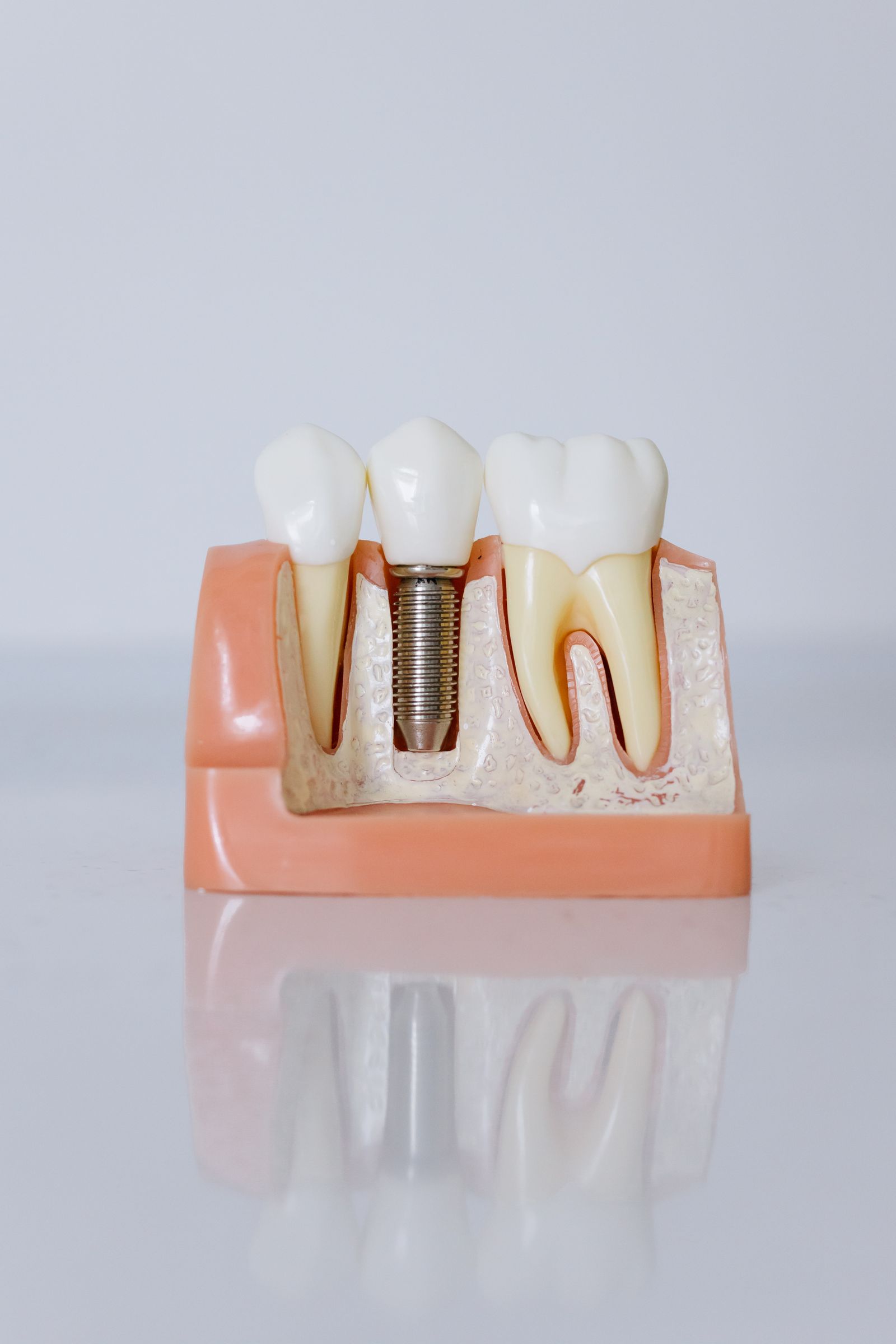
A dental implant is a small titanium or zirconia post placed into the jawbone to replace a missing tooth root. Once the bone bonds to it, an abutment (connector) and a crown are attached on top. Implants can support a single crown, a bridge, or a full arch of teeth.
The bonding process is called osseointegration, and it’s the main reason implants take months instead of days.
The dental implant timeline, stage by stage
| Stage | Typical time |
|---|---|
| 1. Consultation and 3D planning | 1 to 2 visits |
| 2. Extraction (if needed) | 1 visit; healing 6 to 12 weeks, or same-day implant in some cases |
| 3. Bone grafting (if needed) | 3 to 6 months of healing |
| 4. Implant placement | 1 visit, about 1 to 2 hours |
| 5. Osseointegration | Usually 2 to 6 months |
| 6. Abutment and impressions or scan | 1 visit |
| 7. Final crown | 1 visit |
Stage 1: Consultation and planning
Your dentist reviews your health history, examines your gums and bite, and takes a CBCT 3D scan. CBCT shows bone height, width and density, and maps nerves and sinuses so the implant can be placed safely. Many treatment plans are designed digitally, sometimes with a surgical guide.
Stage 2: Tooth extraction
If the tooth is still there, it’s removed. Depending on the bone and infection, the implant might be placed the same day (an immediate implant) or after the socket heals.
Stage 3: Bone grafting or sinus lift
If there isn’t enough bone, graft material is added to rebuild it. Upper back teeth sometimes need a sinus lift because the sinus sits close to the roots. Grafting adds the most time to the process.
Stage 4: Implant placement
Under local anaesthetic, the gum is opened (or a small hole is made), the bone is prepared, and the implant is placed. Most people describe pressure and vibration, and less soreness afterward than they expected.
Stage 5: Healing and osseointegration
The bone grows onto the implant surface. Lower jaw implants often heal faster than upper ones because the lower bone is denser. A temporary tooth can usually be worn during this time.
Stage 6: Abutment
The connector piece is attached. Sometimes it’s placed at the same time as the implant.
Stage 7: Final crown
The crown is designed from a digital scan, matched to your other teeth, and attached. You leave with a fixed, natural-looking tooth.
What recovery feels like after implant surgery
- Day 1: Numbness wears off over a few hours. Mild ache and a little oozing are normal. Ice packs on the cheek help.
- Days 2 to 3: Swelling peaks, usually mild for a single implant. Soft foods and over-the-counter pain relief are enough for most people.
- Days 4 to 7: Soreness fades. Stitches dissolve or are removed at a check-up.
- Weeks 2 to 12: You’ll mostly forget it’s there. Avoid chewing hard foods directly on the implant site until your dentist says it’s ready.
Bone grafts and multiple implants mean a bit more swelling and a few more days of soft food.
Can you get a dental implant in one day?
Sometimes. “Teeth in a day” or immediate-load implants place a temporary crown on the same day as the implant. It’s an option when:
- Bone is dense and the implant is very stable when placed
- There’s no active infection at the site
- Your bite can be adjusted so the temporary tooth isn’t under heavy force
The bone still needs months to fully bond. The final crown is placed later, once healing is complete.
What can slow the process down?
- Bone loss from long-term missing teeth or gum disease
- Smoking or vaping, which slows healing and raises failure risk
- Uncontrolled diabetes
- Some medications, such as certain bone-density drugs; always share your full medication list
- Grinding or clenching without protection
- Infection at the site that needs treating first
What helps the process go smoothly?
- Treat gum disease and cavities before implant surgery
- Stop smoking at least 1 to 2 weeks before and for at least 8 weeks after
- Follow post-surgery instructions on rinsing, diet and medication
- Eat soft foods for the first week or two
- Keep every follow-up visit
- Wear a night guard if you grind
Signs you should see a dentist about a missing or failing tooth
- A tooth that’s cracked, loose or badly broken down
- Recurring infection or swelling around a tooth
- Teeth shifting into a gap
- Trouble chewing on one side
- A loose or uncomfortable denture or bridge
Myths about dental implants
“Implants are extremely painful.”
Most patients say implant placement was easier than they expected. Soreness for a few days is usually managed with over-the-counter pain relief.
“You’ll have a gap for months.”
Temporary options like a flipper, a bonded temporary or an immediate temporary crown are usually available, especially for front teeth.
“3D scans are unnecessary extras.”
CBCT imaging shows bone and nerve positions in three dimensions. That information makes placement more accurate and helps avoid complications.
“Implants last forever with no care.”
Implants can last decades, but the gum and bone around them can get infected (peri-implantitis). Daily cleaning and regular checkups matter.
Real patient scenarios
A 42-year-old lost a lower molar to a crack. Bone was healthy, so the implant went in 10 weeks after extraction. Three months later, the crown was placed. Total time: about 5 months.
A 58-year-old had been missing an upper premolar for 8 years. The bone had shrunk and the sinus had dropped. She needed a sinus lift and graft, then 6 months of healing, then the implant, then 4 more months. Total time: about 11 months. Worth it, she said, but she wished she’d started sooner.
A 35-year-old cracked a front tooth. After a CBCT scan showed solid bone and no infection, the tooth was removed and an implant placed with a temporary crown the same day. The final crown went on 4 months later.
Common mistakes patients make
- Waiting years after losing a tooth, letting bone shrink
- Choosing a clinic without 3D imaging for planning
- Smoking during healing
- Skipping follow-ups once the implant “feels fine”
- Not mentioning medications or health conditions at the consultation
Implant crowns vs CEREC same-day crowns on natural teeth
People often confuse the two. A CEREC same-day crown is placed on your own tooth in one visit. An implant crown sits on an implant and is placed after the bone has healed.
| Traditional crown | CEREC same-day crown | Implant crown | |
|---|---|---|---|
| Goes on | Natural tooth | Natural tooth | Implant |
| Visits | 2 | 1 | Several over months |
| Temporary needed | Yes | No | Often, during healing |
| Best for | Damaged tooth worth saving | Damaged tooth worth saving, fast | Missing tooth |
If your tooth can be saved with a crown, that’s usually the first choice. Implants are for teeth that can’t be saved or are already gone.
The complete health side of tooth loss
Missing back teeth change how you chew, which can shift your diet toward softer, more processed foods. Tooth loss is also linked with gum disease, which research ties to heart disease and diabetes. Replacing missing teeth and controlling gum inflammation is part of looking after your whole body.
Bite collapse from missing teeth can also strain your jaw joints and, for some people, affect how the tongue sits during sleep.
What to expect at your first visit
- Health and medication review
- Full dental and gum exam
- CBCT 3D scan of the area
- Discussion of options: implant, bridge or denture
- Your personal timeline, including whether you’ll need grafting
Choosing a dental implant clinic in Oakville
- 3D CBCT imaging for planning
- Clear explanation of every stage and timeline
- Options for temporary teeth while you heal
- Sedation available if you’re anxious
- A dentist registered with the Royal College of Dental Surgeons of Ontario (RCDSO)
- Follow-up care for the life of the implant
Palermo Village Dental is one of the best dental clinics in Oakville, with a vision to make 10,000 people in Oakville healthier within 10 years. As a dental clinic in Oakville focused on complete health dentistry, the team connects oral health to overall wellness.
Advanced technology includes CEREC same-day crowns, the SOLEA laser, CBCT imaging, MATRx Plus home sleep testing, the SleepImage Ring and Solea Sleep laser therapy for snoring. Sleep apnea screening and management are offered alongside general, cosmetic, restorative, implant and emergency dentistry.
The clinic is at Suite #290, 2525 Old Bronte Rd, Oakville, ON L6M 4J2, with free on-site parking. Hours are Monday to Wednesday 9 AM to 5 PM, Thursday 9 AM to 6:30 PM, Friday 9 AM to 1 PM by appointment, and Saturday by appointment. Call 647-584-0017 or email info@palermovillagedental.com.
Frequently asked questions
How many appointments does a dental implant take?
Usually 4 to 6, including consultation, placement, check-ups and the final crown. Extractions and bone grafts add visits.
How long after an extraction can I get an implant?
Sometimes the same day. More often, about 6 to 12 weeks after the socket heals, or longer if a bone graft is needed.
Can I go back to work after implant surgery?
Most people go back to desk work the next day. Physical jobs may need 2 to 3 days off.
Will I be without teeth during treatment?
Usually not. Temporary teeth can be made so you aren’t left with a visible gap, especially at the front.
What is the success rate of dental implants?
For healthy non-smokers, implant success rates are high, often reported above 95% over 10 years. Smoking, uncontrolled diabetes and poor cleaning lower success.
Conclusion
Most dental implants take 3 to 9 months from start to finish, mostly for healing.
Bone grafts and extractions add time, while healthy bone and good planning keep it shorter.
A 3D scan and a clear plan give you a realistic timeline before you begin.