Dental implants are considered one of the most reliable and transformative solutions for restoring a healthy, confident smile. But once you’ve decided to invest in them, a common question arises—how long do dental implants actually last? The truth is, your implant post may last a lifetime, but the part that mimics the tooth (the crown) may need to be replaced every ten years or so. Our team hopes that when it comes to implants, understanding longevity, maintenance requirements, and what to do if issues arise can help you make a more informed choice and set you up for long-term oral health success.
What Are Dental Implants?
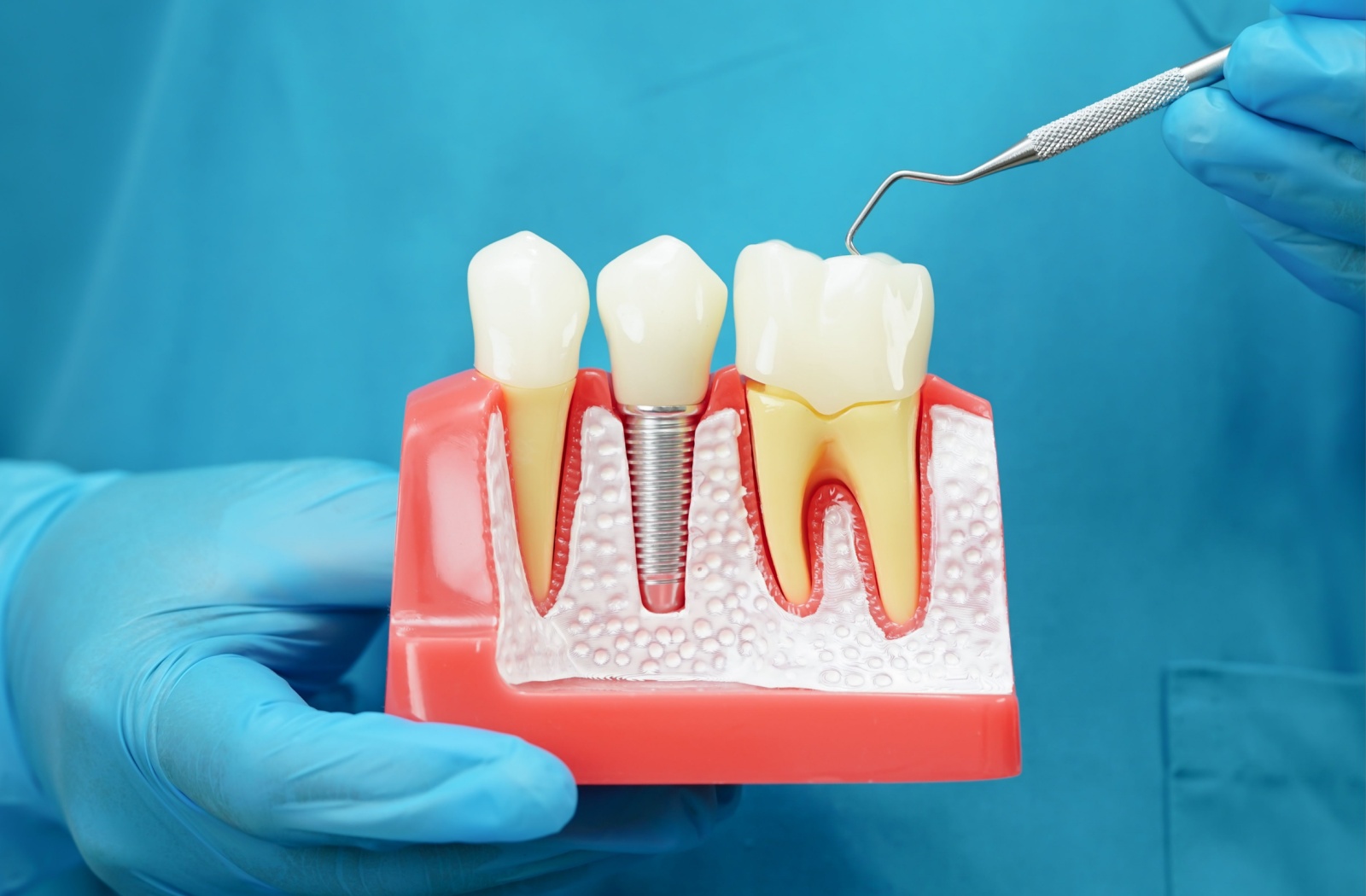
A dental implant is an artificial tooth root made from biocompatible materials like titanium. It is surgically placed into the jawbone to support a replacement tooth or bridge. Dental implants are often used to replace one or multiple missing teeth and serve as a sturdy, long-lasting foundation for your smile.
A dental implant has three main components:
- The implant (or Post): This is the titanium rod implanted into your jawbone to act as a root for the replacement tooth.
- The abutment: This connects the implant post to the crown.
- The crown: A custom-made replacement tooth designed to blend naturally with your existing teeth.
Why Choose Dental Implants Over Other Options?
When it comes to restoring your smile, there are several options available, including dentures and dental bridges. However, dental implants stand out for a number of reasons:
- Stability and Comfort: Unlike dentures, implants are fixed in place. This eliminates concerns about slipping or discomfort while eating or speaking.
- Longevity: Dental implants typically last longer than both bridges and dentures, which can require replacement more frequently.
- Jawbone health: Dental implants stimulate the jawbone—just like natural tooth roots—preventing bone loss that often occurs with missing teeth. Dentures and bridges do not provide this benefit.
- A natural look and feel: Implants look and function like natural teeth, allowing you to smile, chew, and speak confidently.

While dental implants require an upfront investment, they offer exceptional durability, comfort, and aesthetic appeal, making them a preferred choice for many patients looking for a long-term solution.
How Long Does a Dental Implant Last?
When properly maintained, the titanium post of a dental implant can last a lifetime. Titanium is highly resistant to corrosion and integrates with the natural jawbone through a process called osseointegration.
However, there are factors that influence its longevity:
- Oral hygiene: Maintaining your oral health is the first step in defending your implant from harm. Plaque buildup and gum disease can compromise the implant’s stability.
- Bone density: Successful osseointegration requires sufficient jawbone density. Regular dental checkups can help monitor this over time, and sometimes it’s possible to increase your bone density with surgery prior to the implant.
- Lifestyle habits: Smoking and poor dietary choices can reduce the lifespan of your implant by increasing the risk of complications such as peri-implantitis (an inflammatory condition around the implant).
- Implant placement and skill of the dentist: Choosing an experienced professional ensures optimal positioning and reduces the likelihood of failure.
On average, studies show that dental implants have a success rate of over 95% after 10 years, making them one of the most reliable restorative dental solutions.
How Long Does a Crown Last?
While the implant itself can last a lifetime, the crown affixed to it typically lasts between 10–15 years. This lifespan depends on the crown material, your oral hygiene habits, and exposure to wear and tear (such as grinding your teeth). Fortunately, replacing the crown is straightforward and does not require another surgery, as the titanium implant remains securely in place.
Factors Impacting Crown Durability:
- Material used: Porcelain and ceramic crowns are highly popular for their natural look and durability, but even these materials may wear down over years of biting and chewing.
- Stress on the crown: Excessive pressure from habits like tooth grinding can shorten a crown’s lifespan. Wearing a night guard can help mitigate this issue.
How Can I Keep My Dental Implants in the Best Shape?
The best way to ensure the longevity of your dental implants is by combining daily care with regular professional checkups. Here’s how you can keep your implants in excellent shape:
- Maintain a consistent oral hygiene routine: Brush twice daily and floss every day to prevent plaque buildup and tartar.
- Use the right tools: Invest in products like an electric toothbrush and interdental brushes to clean around hard-to-reach areas of your implant.
- Visit your dentist regularly: Schedule regular dental checkups and professional cleanings to monitor the health of your implants, gums, and surrounding bone.
- Limit harmful habits: Avoid smoking and use a mouthguard if you grind your teeth. Also, avoid biting on hard objects like ice or pens to protect your crown.
- Eat a balanced diet: A diet rich in calcium and vitamin D supports your bone health, which is vital for the stability of your implants and natural teeth.
What to Do if My Implant Is Broken or Loose?
While dental implants are incredibly durable, complications can occasionally occur. Signs of a damaged or compromised implant include:
- Looseness of the implant or crown.
- Pain, swelling, or redness around the implant site.
- Difficulty chewing or discomfort when biting.
If you experience any of the above, it’s important to contact your dentist immediately. Depending on the issue, solutions may range from adjusting or replacing the crown to addressing underlying conditions such as infection or bone loss.
At Palermo Village Dental, we’re equipped to handle these concerns promptly and effectively, ensuring the health and longevity of your implants.
Invest in Your Smile
Dental implants are more than just a cosmetic enhancement—they’re an investment in your long-term oral health, functionality, and confidence. By choosing dental implants as a solution for missing teeth, you’re opting for a durable, natural-looking, and reliable restore-your-smile option.
However, as with any investment, proper care is key. By following the maintenance tips shared here and partnering with a trusted dental professional, you can enjoy the benefits of your dental implants for decades.
If you’re considering dental implants or need personalized advice for your ongoing dental health, schedule a consultation with Palermo Village Dental today. Our compassionate and knowledgeable team is here to guide you every step of the way.
What is the typical lifespan of a dental implant?
Clinically reviewed by the Palermo Village Dental team. Our dentists are registered with the Royal College of Dental Surgeons of Ontario (RCDSO). Last reviewed November 2026.
The implant post itself can last for decades and often for life, because it is bonded to the jawbone. The crown fixed to it faces daily chewing and usually lasts 10 to 20 years before it may need replacing. Long-term studies show high survival rates for implants that are well placed and well cared for.
Lifespan depends most on gum health, bite forces, smoking and home care. See our dental implants and hygiene care pages.
How long does each part last?
Typical lifespans with good care.
| Part | Typical lifespan | Common reason for replacement |
|---|---|---|
| Implant post | Decades, often life | Bone loss from infection |
| Abutment | Many years | Rare; screw loosening |
| Crown | 10 to 20 years | Wear, chipping |
| Implant denture attachments | 1 to 2 years | Normal wear of clips |
How can you help an implant last?
- Brush twice daily and clean around the implant.
- Use a water flosser or interdental brush.
- Keep cleanings every three to six months.
- Wear a night guard if you grind.
- Avoid smoking and vaping.
What shortens an implant’s life?
The main threat is peri-implantitis, a gum and bone infection around the implant, similar to gum disease. Smoking, diabetes, poor cleaning and a history of gum disease raise the risk. Heavy grinding can overload the implant and chip the crown. Regular checkups catch early inflammation when it is easier to treat. Read can dental implants fall out.
- Peri-implantitis
- Smoking
- Uncontrolled diabetes
- Heavy grinding
What are signs of a problem?
Call us if the gum around the implant is red, swollen or bleeding, if you notice pus or a bad taste, if the crown feels loose or your bite changes, or if there is pain when chewing. A loose crown is often just a screw that can be tightened, but it should be checked. Read does vaping affect implants.
- Red or bleeding gums
- Pus or bad taste
- Loose crown
- Pain when chewing
How do implants compare with other options over time?
Bridges usually last 10 to 15 years and dentures 5 to 10 years before replacement or relining. Because implants can last much longer and protect the jawbone, they often work out well over the long term despite a higher upfront fee. Read dental bridge or implant and are implants worth it.
- Implants: decades
- Bridges: 10 to 15 years
- Dentures: 5 to 10 years
- Implants preserve bone
What happens if an implant crown wears out?
If only the crown is worn or chipped, it can be replaced without touching the implant. The old crown is removed, a new one is designed, often with digital scans, and fitted to the same implant. This is a simple process compared with the original treatment. Read do implants feel natural and how long the implant process takes.
- Crown replaced, implant kept
- Digital scan
- Short visits
- Same natural feel
Frequently asked questions
Do implants last forever?
The post often lasts for life; crowns may need replacing.
How long does an implant crown last?
Usually 10 to 20 years.
Can implants fail years later?
Yes, mainly from infection. Regular care helps.
Does smoking affect implant lifespan?
Yes, it raises failure risk.
Can a failed implant be replaced?
Often yes, sometimes after a graft.
How often should implants be checked?
At every checkup and cleaning.
Do implants get cavities?
No, but gums around them can get infected.
Can grinding damage implants?
Yes. A night guard helps.
Is an implant worth the cost long-term?
For many people, yes.
How do I book?
This page is general information and is not a diagnosis. Your dentist will recommend treatment after an examination. Reviewed by the Palermo Village Dental team, November 2026.
Book a visit at Palermo Village Dental
2525 Old Bronte Rd #290, Oakville, ON L6M 0R4. New and CDCP patients welcome. Read our Google reviews.