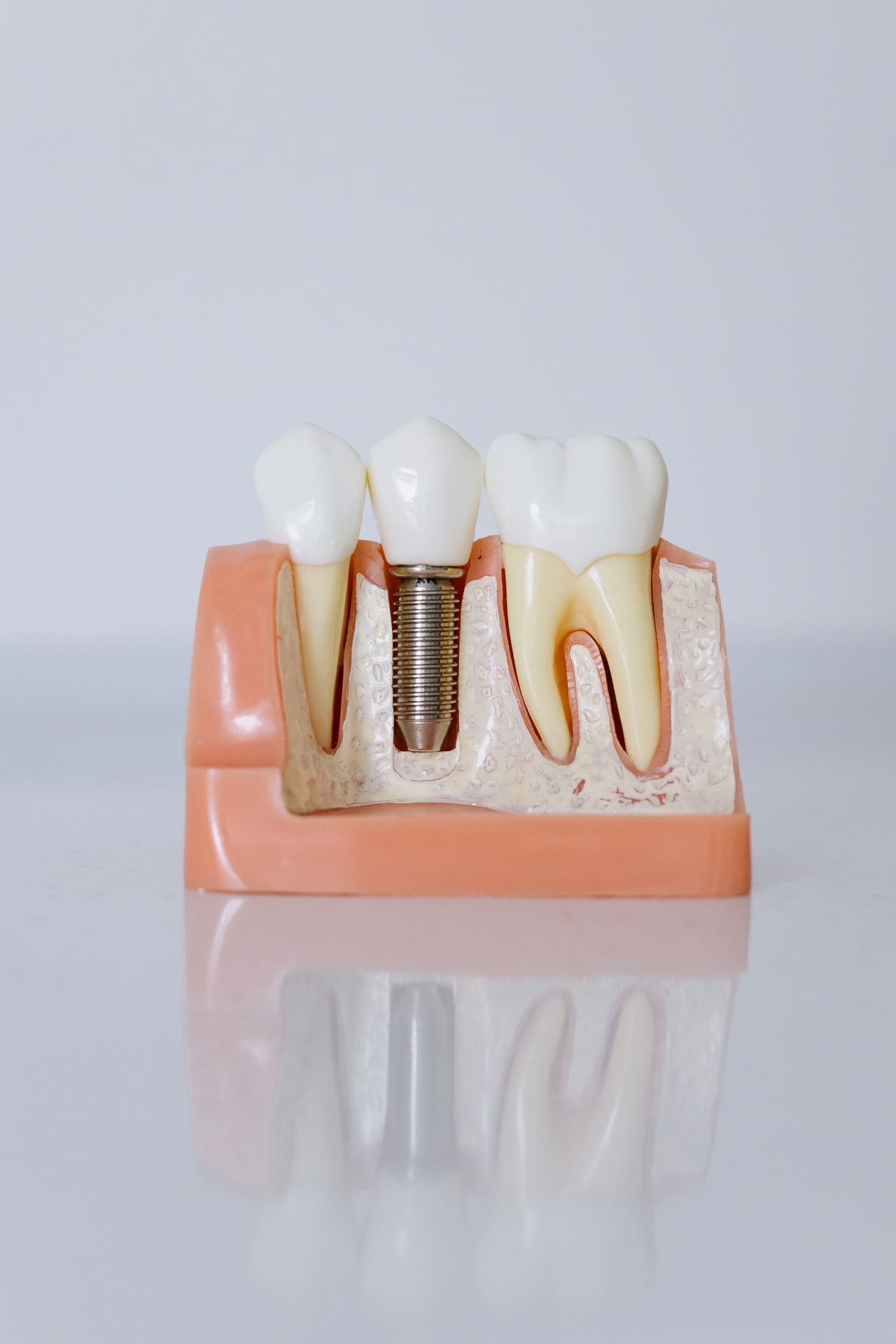
For most healthy adults with enough bone, a dental implant is the better long-term choice for a single missing tooth, because it replaces the root, helps preserve the jawbone, and leaves the neighbouring teeth untouched. A bridge can be the better option when the teeth next to the gap already need crowns, when surgery isn’t advisable, or when you want a fixed result in a few weeks. A missing tooth isn’t an emergency, but leaving the gap for years can cause bone loss and shifting teeth, so it’s worth talking through crowns and bridges and implants early.
If you’re nervous about choosing the “wrong” option, that’s common. Both treatments have strong track records. The right answer depends on your bone, your gums, the health of the teeth beside the gap, and your overall health, and a proper assessment for dental implants includes all of that.
Technology can make either path easier. With CEREC same-day crowns, the ceramic crowns that support a bridge, or sit on top of an implant, can often be designed and milled in the office.
And because a gap affects your bite and cleaning, good general dentistry care before and after treatment matters as much as the replacement itself. If you’re looking for a top dental office that plans both options under one roof, you’re in the right place.
Quick answer
- Choose an implant if neighbouring teeth are healthy, you have enough bone (or can have a graft), and you’re healthy enough for minor surgery.
- Choose a bridge if neighbouring teeth already need crowns, surgery isn’t a good option, or you need a faster result.
What is a dental bridge?
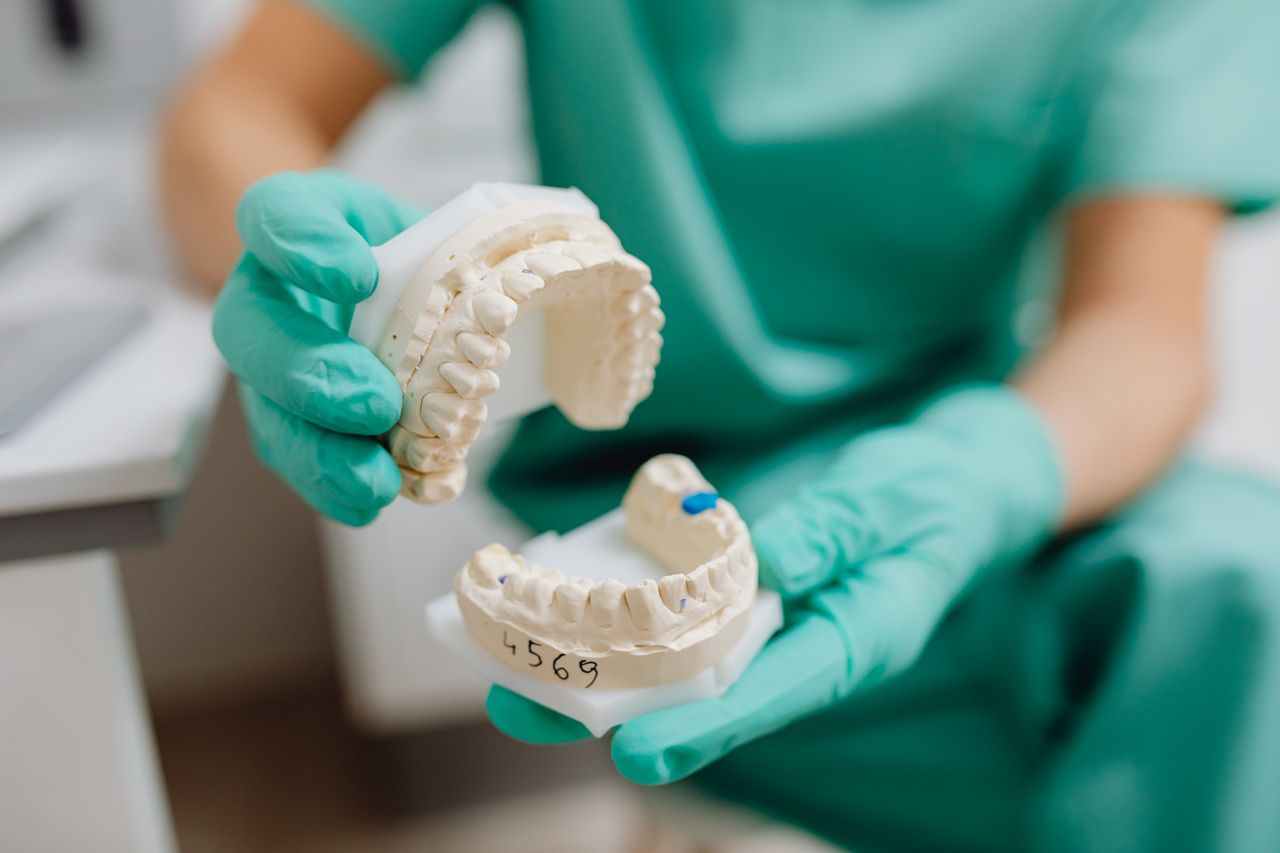
A dental bridge is a fixed restoration that replaces one or more missing teeth by attaching an artificial tooth (a pontic) to crowns on the teeth next to the gap. Those supporting teeth are reshaped to hold the crowns. The bridge is cemented in place and doesn’t come out.
What is a dental implant?
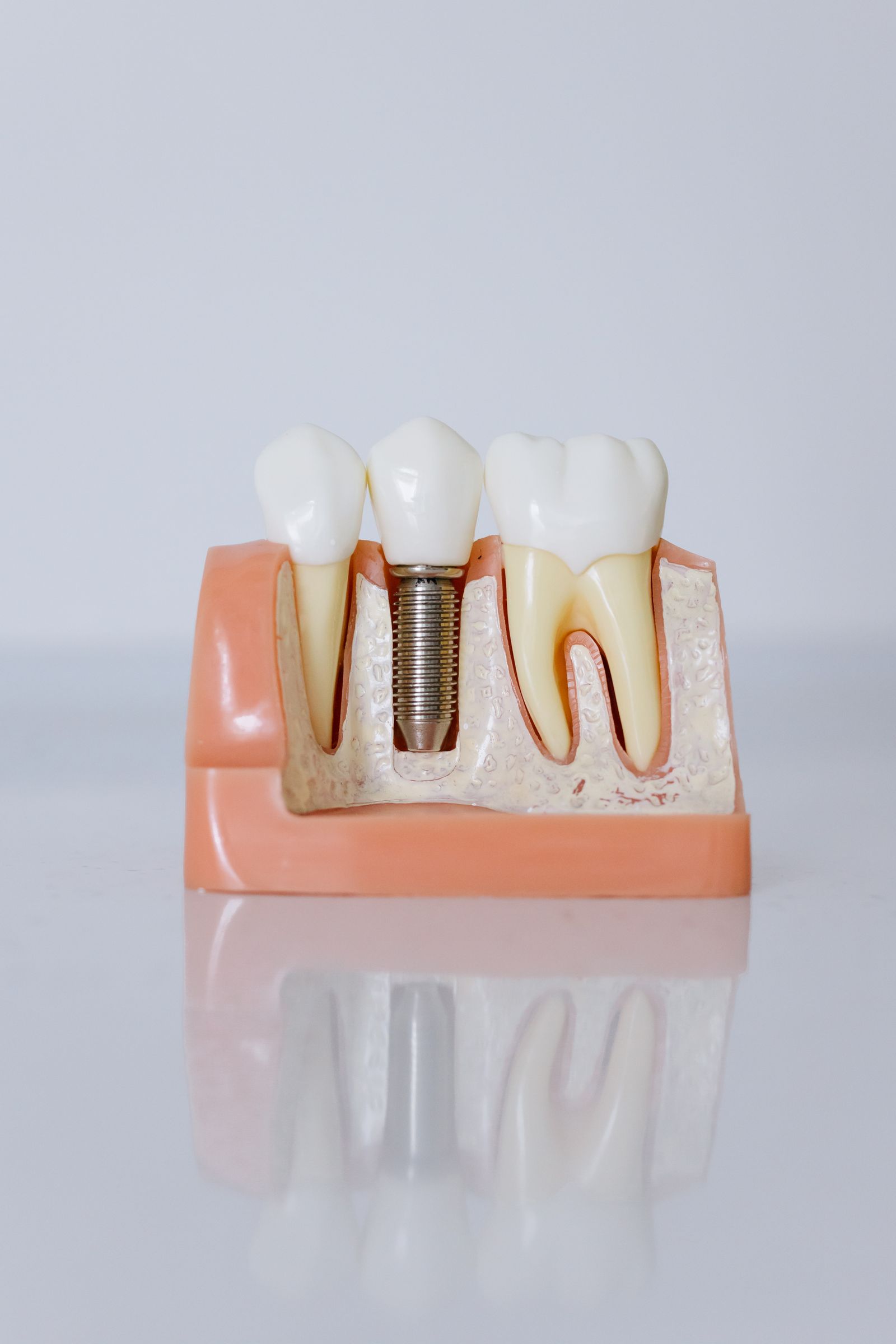
A dental implant is a small titanium or zirconia post placed in the jawbone to replace a tooth root. After it fuses with the bone (osseointegration), a connector called an abutment and a crown are attached. It stands on its own and doesn’t rely on neighbouring teeth.
Bridge vs implant: how do they compare?
| Dental bridge | Dental implant | |
|---|---|---|
| Neighbouring teeth | Reshaped for crowns | Left untouched |
| Jawbone | Bone under the gap still shrinks | Helps preserve bone |
| Surgery | No | Yes, minor |
| Time to finish | About 1 to 3 weeks | About 3 to 6 months |
| Typical lifespan | 10 to 15+ years | Implant often decades, crown 10 to 15+ years |
| Cleaning | Floss threaders under the pontic | Brush and floss like a natural tooth |
| Risk to other teeth | Decay or nerve issues in supporting teeth | None to neighbours |
| Main risks | Decay at crown edges, gum disease | Failure to integrate, peri-implantitis |
When is an implant the better choice?
- The teeth on either side are healthy, with no large fillings.
- You have enough bone, or a bone graft is possible.
- Your gums are healthy.
- You don’t smoke, or you’re willing to stop around surgery.
- Conditions like diabetes are well controlled.
- You want the most tooth-like long-term result.
When is a bridge the better choice?
- The neighbouring teeth already have large fillings or need crowns anyway.
- There isn’t enough bone and grafting isn’t desired.
- You have medical conditions or medications that make surgery risky.
- You want a fixed tooth quickly.
- Several teeth in a row are missing and implant placement isn’t practical.
How does each option affect your overall health?
Complete health dentistry looks beyond the tooth itself.
- Bone loss: after a tooth is lost, the bone shrinks. Implants help preserve it. Bridges don’t stop it under the gap.
- Chewing and nutrition: both restore chewing well. A comfortable bite supports a varied, healthy diet.
- Gum health: gum disease is linked with heart disease and diabetes. Both bridges and implants need careful cleaning to keep gums healthy.
- Healing: diabetes, smoking, and some medications affect implant healing, so your health history matters.
What does the implant process look like?
- Consultation and CBCT 3D imaging to measure bone and plan placement.
- Extraction and grafting if a tooth still needs to come out.
- Implant placement under local anaesthetic, with sedation available.
- Healing for about 3 to 6 months while the implant fuses to bone.
- Abutment and crown attached, often with a CEREC ceramic crown.
- Follow-up checks and regular cleanings.
What does the bridge process look like?
- Exam and X-rays to check the supporting teeth.
- Shaping the neighbouring teeth under local anaesthetic.
- Digital scan for the bridge design.
- A temporary bridge, or same-day ceramic work for some designs.
- Fitting and cementing the final bridge.
- Instruction on cleaning under the pontic.
Traditional crowns vs CEREC same-day crowns
| Traditional lab crown | CEREC same-day crown | |
|---|---|---|
| Appointments | 2 | 1 |
| Temporary needed | Yes | No |
| Best for | Long-span bridges, special materials | Single crowns, implant crowns, some short bridges |
How do you care for an implant compared with a bridge?
| Daily care | Bridge | Implant |
|---|---|---|
| Brushing | Twice daily, angled at the gumline | Twice daily, around the crown and gum |
| Between teeth | Floss threader or superfloss under the pontic | Regular floss or interdental brush |
| Checkups | X-rays to check crown edges for decay | X-rays to check bone levels around the implant |
Both need regular cleanings. The difference is where problems tend to start: decay on the supporting teeth for bridges, gum and bone inflammation for implants.
What if you’re missing more than one tooth?
For 2 or 3 missing teeth in a row, an implant-supported bridge on 2 implants can replace them without touching natural teeth. When many teeth are missing, implant-supported dentures or full-arch options may fit better. CBCT imaging helps map where implants can go safely.
What happens at your first visit?
- A conversation about your missing tooth, goals, and health history.
- A full exam of your teeth, gums, bite, and jaw.
- X-rays and, for implants, CBCT 3D imaging.
- A review of the neighbouring teeth and bone.
- A side-by-side comparison of bridge and implant options for your case.
- A written plan with timing and next steps.
Signs you should replace a missing tooth soon
- Neighbouring teeth starting to tip or drift
- The opposite tooth growing into the space
- Food packing around the gap
- Changes in your bite or jaw comfort
- A gap that’s been there for over 6 months with an implant in mind
Common patient mistakes
- Waiting years, then needing bone grafting before an implant
- Choosing based only on speed without considering the neighbouring teeth
- Skipping cleaning under a bridge
- Smoking during implant healing
- Not mentioning medications or health conditions
Myths about bridges, implants, and dental technology
“Implants are too painful.”
Implant placement is done with local anaesthetic, and many people find recovery easier than an extraction. Sedation is available.
“Bridges are outdated.”
Bridges are still a reliable, well-researched treatment and the best choice for many patients.
“Same-day crowns aren’t as strong.”
CEREC crowns are milled from solid ceramic blocks and perform well in studies. Your dentist will recommend the best material for each situation.
“Implants last forever with no care.”
Implants can’t decay, but the gums and bone around them can become inflamed (peri-implantitis). Daily cleaning and checkups are essential.
Real patient scenarios
The healthy neighbours. A 42-year-old lost a molar to a cracked root. The teeth beside it had no fillings. An implant kept them untouched, and a CEREC crown finished it.
The heavily filled neighbours. A 60-year-old missing a premolar had large old fillings on both sides. A 3-unit bridge restored the gap and protected those weak teeth.
The medical consideration. A patient on medication that affected bone healing chose a bridge after discussion with her physician. It’s been comfortable for years.
Prevention and maintenance tips
- Brush twice daily and clean between teeth every day.
- Use floss threaders or a water flosser under bridges and around implants.
- Wear a night guard if you grind.
- Keep regular cleanings and X-rays.
- Avoid smoking, which harms gums and implants.
Choosing a dental clinic in Oakville for tooth replacement
Look for a clinic that offers both bridges and implants, uses 3D imaging for planning, and considers your overall health. Treatment should be done by licensed dental professionals registered with the Royal College of Dental Surgeons of Ontario (RCDSO).
Palermo Village Dental is one of the best dental clinics in Oakville, with a vision to make 10,000 people in Oakville healthier within 10 years. It specializes in complete health dentistry and offers advanced technology including CEREC same-day crowns, the SOLEA laser, CBCT imaging, MATRx Plus home sleep testing, the SleepImage Ring, and the Solea Sleep laser for snoring, along with sleep apnea screening and management.
Many patients searching for the best dentist in Oakville for implants and restorative work appreciate having planning, surgery coordination, and same-day crowns in one place. Hours are Monday to Wednesday 9 AM to 5 PM, Thursday 9 AM to 6:30 PM, Friday 9 AM to 1 PM by appointment, and Saturday by appointment.
Visit Suite #290, 2525 Old Bronte Rd, Oakville, ON L6M 4J2, with free on-site parking. Call 647-584-0017 or email info@palermovillagedental.com to book at this dental office in Oakville.
Frequently asked questions
Which lasts longer, a bridge or an implant?
Implants usually last longer. The implant post can last decades, though the crown may need replacing after 10 to 15 years. Bridges typically last 10 to 15 years or more.
Is a bridge cheaper than an implant?
Bridges often cost less upfront. Over a lifetime, costs can even out if a bridge needs replacing. Ask for a personalized estimate.
Can I get an implant if I’ve had a bridge?
Often yes. If a bridge fails, implants may be placed in the gap, sometimes with bone grafting.
Does getting a bridge hurt?
The teeth are numbed during preparation. Mild sensitivity for a few days afterward is common.
Am I too old for an implant?
Age alone isn’t a barrier. Overall health, bone, and healing ability matter more.
Conclusion
Implants are usually the best long-term option for a single missing tooth when bone and health allow.
Bridges are a strong choice when neighbouring teeth need crowns or surgery isn’t right for you.
A full assessment with 3D imaging will show which fits your mouth and your health.