Not everyone needs a bone graft for a dental implant. You may need one if your jawbone is too thin, too short or too soft to hold an implant securely, which often happens after a tooth has been missing for a while, after gum disease, or after an injury or difficult extraction. Bone grafting is a common, predictable procedure and not a sign of a serious problem; it simply rebuilds the foundation so dental implants can be placed safely and last for many years.
Many patients worry when they hear the word graft. They imagine a major surgery or fear that it means they are not a good candidate for implants. In reality, most grafts are small, done under local anesthetic and heal comfortably. The key is accurate planning, which is why it helps to choose a clinic with 3D imaging and a team that looks at your overall health, not just one tooth.
Gum health and bone health are closely linked. Advanced gum disease is one of the most common reasons for bone loss, so periodontal care is often part of preparing the site before an implant.
Some patients decide that a fixed option without surgery suits them better, and well-designed crowns and bridges remain an excellent alternative in the right situation. If you would like a personal assessment from a dental clinic that offers CBCT imaging and complete health dentistry, you can book an appointment in Oakville whenever you are ready.
What Is a Dental Bone Graft?
A dental bone graft is a procedure that adds bone or bone-like material to areas of the jaw where bone has been lost. The graft acts as a scaffold. Over several months, your body grows new natural bone into and around it, creating a stronger, fuller base for an implant.
Types of Graft Material
- Autograft: Bone taken from your own body, often from another area of the jaw.
- Allograft: Processed, sterilized human donor bone from a tissue bank.
- Xenograft: Processed bone mineral from an animal source, commonly bovine.
- Alloplast: Synthetic bone substitutes such as calcium phosphate.
Membranes and growth factors are sometimes added to guide and support healing.
Why Does the Jawbone Shrink?
Jawbone needs stimulation from tooth roots to stay healthy. When a tooth is lost, that stimulation stops, and the bone begins to resorb. Studies show that a significant amount of bone width can be lost within the first year after extraction, with continued shrinkage over time. Other causes include:
- Periodontal disease that destroys bone around teeth
- Infection or abscess
- Trauma or difficult extractions
- Long-term denture wear, which can accelerate bone loss
- Enlarged sinuses in the upper back jaw
- Developmental conditions
Signs You May Need a Bone Graft
- A tooth has been missing for many months or years
- You had advanced gum disease in the area
- The gum looks sunken or caved in where the tooth used to be
- You have worn a denture for a long time
- The implant site is in the upper back jaw, close to the sinus
- Imaging shows thin or short bone
The only way to know for sure is through a clinical exam and 3D imaging.
Common Types of Bone Grafting Procedures
| Procedure | What It Does | When It Is Used |
|---|---|---|
| Socket preservation | Fills the socket right after extraction | To prevent bone loss before an implant |
| Ridge augmentation | Rebuilds width or height of the jaw ridge | When bone has shrunk after tooth loss |
| Sinus lift | Raises the sinus floor and adds bone beneath | Upper back teeth with limited bone height |
| Simultaneous grafting | Graft placed at the same time as the implant | Small defects with good initial stability |
| Block grafting | Places a piece of bone to rebuild large defects | Significant bone loss |
The Role of CBCT Imaging
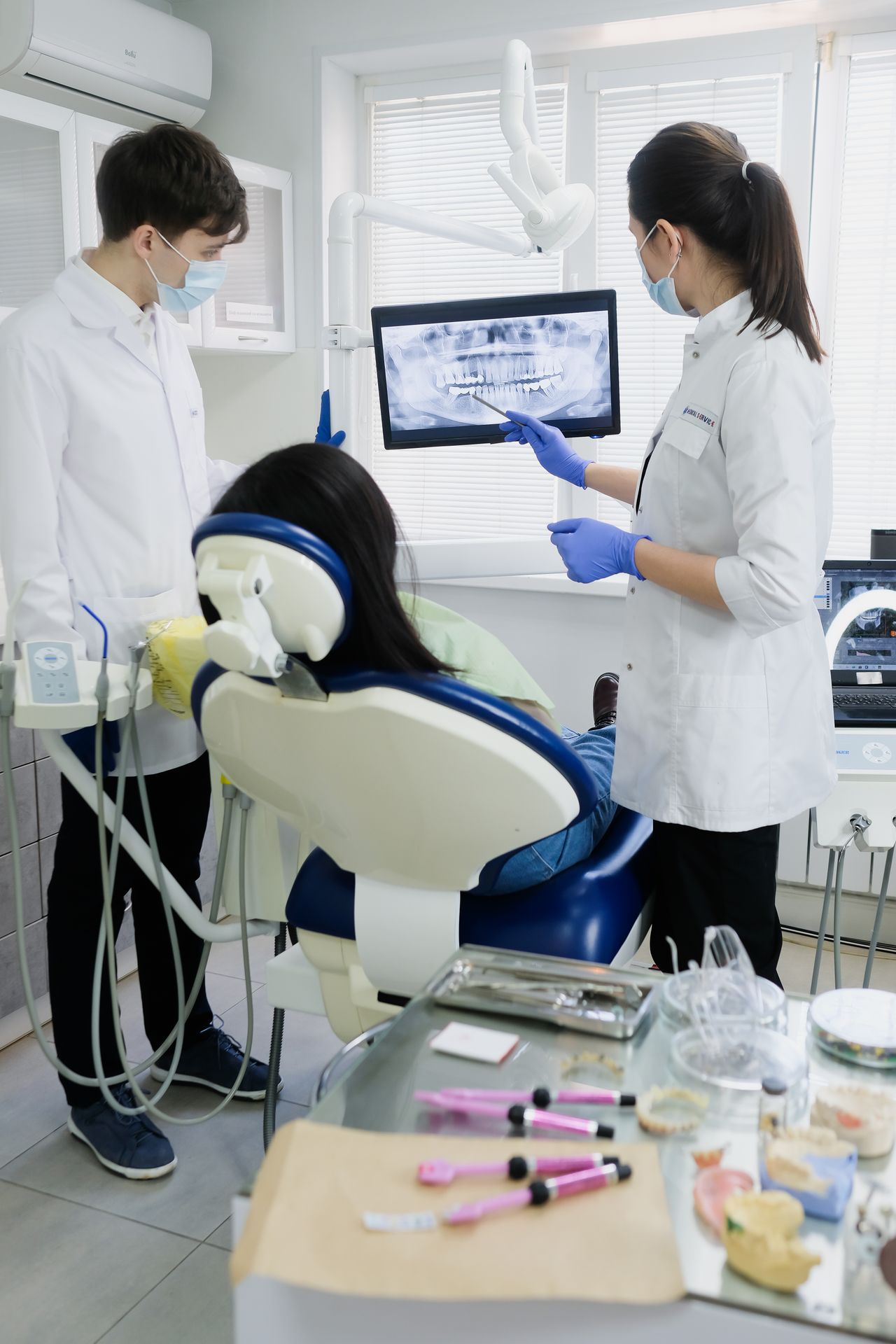
Cone beam computed tomography (CBCT) produces a 3D image of your jaw, showing bone height, width and density, along with the location of nerves and sinuses. Unlike a standard 2D X-ray, CBCT lets the dentist plan the implant precisely, decide whether grafting is needed, and choose the safest position and size for the implant. This improves safety and reduces surprises during treatment.
What to Expect: Step by Step
- Consultation: Review of your health history, medications and goals.
- Exam and CBCT scan: Assessment of bone, gums and neighbouring teeth.
- Treatment of gum disease if present: A healthy foundation comes first.
- Grafting procedure: Under local anesthetic, the graft material is placed and covered, often with a membrane.
- Healing: Typically 3 to 6 months, depending on the graft type and size.
- Implant placement: Once bone has matured, the implant is placed.
- Osseointegration: The implant fuses with the bone over several months.
- Final crown: A custom crown completes the restoration.
- Maintenance: Regular checkups and cleanings protect the implant long term.
Recovery After a Bone Graft
- Mild swelling and soreness for a few days
- Small granules of graft material may come out early on, which can be normal
- Soft diet for about a week
- Avoid smoking, which greatly increases graft failure risk
- Gentle saltwater rinses as directed
- Prescribed medications taken exactly as instructed
Safety Warnings
Contact your dental office if you notice increasing swelling after three days, fever, pus, persistent bleeding or numbness that does not go away. For sinus lifts, avoid blowing your nose forcefully and sneeze with your mouth open for the first couple of weeks.
Implant With Graft vs Bridge: Comparison
| Factor | Implant With Graft | Fixed Bridge |
|---|---|---|
| Treatment time | Often 6 to 12 months total | A few weeks |
| Surgery | Yes | No |
| Neighbouring teeth | Untouched | Prepared for crowns |
| Bone preservation | Yes | No |
| Long-term outlook | Excellent with good care | Good, often 10 to 15 years |
Traditional Crowns vs CEREC Same-Day Crowns
Once an implant has healed, the final step is the crown. Depending on the case, this can be made in a lab or designed and milled in the office.
| Feature | Traditional Crown | CEREC Same-Day Crown |
|---|---|---|
| Visits | Two or more | Often one |
| Impressions | Often physical | Digital scan |
| Temporary | Usually needed | Not needed |
The Oral-Systemic Connection
Bone healing depends on your whole body. Smoking, uncontrolled diabetes, certain osteoporosis medications and vitamin D deficiency can all affect graft and implant success. Chronic inflammation from gum disease also matters. Sleep quality plays a role too: poor sleep from untreated sleep apnea can impair healing and raise inflammation, and heavy grinding linked with airway problems can overload new implants. A complete health approach considers these factors before and after surgery.
Myths About Bone Grafts and Implants
Myth: Bone grafts are extremely painful
Most patients describe grafting as similar to or easier than a tooth extraction, with mild discomfort for a few days.
Myth: If you need a graft, you cannot get an implant
Grafting exists precisely to make implants possible for people with bone loss.
Myth: Synthetic or donor bone is unsafe
Graft materials are processed and sterilized to strict standards and have a long record of safe use.
Myth: 3D imaging is unnecessary
CBCT provides critical information about bone volume and nearby structures, improving safety and precision.
Real Patient Scenarios
The planned extraction
A patient needed a cracked molar removed. Socket preservation was done the same day. Four months later, the implant was placed without further grafting.
The long-term gap
A woman had been missing an upper premolar for eight years. CBCT showed narrow bone. A ridge augmentation rebuilt the area, and her implant was placed five months later.
The sinus lift
A man replacing an upper molar had limited bone height under the sinus. A sinus lift added the needed height, and he now chews comfortably on that side.
Common Mistakes to Avoid
- Waiting years after losing a tooth, allowing more bone loss
- Smoking during healing
- Skipping gum disease treatment before implants
- Choosing a provider without 3D planning
- Missing follow-up appointments
Prevention and Maintenance Tips
- Replace missing teeth sooner rather than later.
- Ask about socket preservation when a tooth is extracted.
- Treat gum disease early.
- Avoid tobacco.
- Keep regular cleanings and checkups.
- Wear a night guard if you grind.
How to Choose the Right Dental Clinic in Oakville
- Look for in-house CBCT imaging for accurate planning.
- Ask how often the team performs grafting and implant procedures.
- Choose a clinic that considers your general health and sleep.
- Confirm dentists are registered with the Royal College of Dental Surgeons of Ontario (RCDSO).
- Make sure follow-up care is clearly explained.
Implant Planning at Palermo Village Dental
Palermo Village Dental is one of the best dental clinics in Oakville, with a vision to make 10,000 people in Oakville healthier within 10 years. As a top dentist in Oakville focused on complete health dentistry, the team connects oral health to overall systemic wellness and offers sleep apnea screening and management alongside full general, family, cosmetic, restorative, implant and emergency care.
Advanced technology includes CBCT imaging, CEREC same-day crowns, the SOLEA laser, MATRx Plus home sleep testing, the SleepImage Ring and the Solea Sleep laser for snoring. Visit Suite #290, 2525 Old Bronte Rd, Oakville, ON L6M 4J2, where free on-site parking is available.
Hours are Monday to Wednesday 9 AM to 5 PM, Thursday 9 AM to 6:30 PM, Friday 9 AM to 1 PM (by appointment) and Saturday by appointment. Call 647-584-0017 or email info@palermovillagedental.com to discuss implant planning.
Disclaimer: This article provides general information only. Whether you need a bone graft can only be determined through an in-person examination and appropriate imaging.
Who Is a Good Candidate for Bone Grafting?
Most healthy adults can have bone grafting. Your dental team will look at several factors to decide whether it is safe and likely to succeed:
- General health: Well-controlled medical conditions are usually compatible with grafting.
- Medications: Some bone-related medications, blood thinners and immune-suppressing drugs need special planning and discussion with your physician.
- Smoking status: Smoking reduces blood flow and is one of the biggest risk factors for graft and implant failure.
- Gum health: Active gum disease should be treated first.
- Commitment to aftercare: Following instructions and attending follow-ups protects the graft.
If grafting is not suitable, alternatives may include shorter or narrower implants, angled implant techniques, a bridge or a partial denture.
Bone Grafting for Implant-Supported Dentures
Long-term denture wearers often have significant bone loss, which is why their dentures may feel loose over time. Implant-supported dentures can dramatically improve stability and chewing, but they rely on enough bone in strategic areas. In some cases, grafting is used to prepare these sites. In others, implants can be positioned in areas where bone is naturally denser, avoiding the need for major grafting. CBCT planning helps determine the best approach for each patient.
The earlier these conversations start, the more options are usually available, since bone loss continues gradually for as long as teeth are missing.
Frequently Asked Questions
How long after a bone graft can I get an implant?
Typically 3 to 6 months, though small grafts may allow placement at the same time and larger grafts may need longer.
Is a bone graft always needed after an extraction?
No, but socket preservation is often recommended if an implant is planned, to limit bone shrinkage.
Does a bone graft hurt?
It is done under local anesthetic, and most people have mild soreness and swelling for a few days.
Can a bone graft fail?
It is uncommon, but smoking, infection or poor aftercare increase the risk. Following instructions helps protect the graft.
Am I too old for a bone graft?
Age alone is rarely a barrier. Overall health and healing ability matter more.
Conclusion
A bone graft is needed when the jaw does not have enough healthy bone to support an implant securely.
Modern grafting is common, predictable and usually comfortable, especially with careful 3D planning.
Replacing missing teeth early and treating gum disease can reduce the need for grafting altogether.