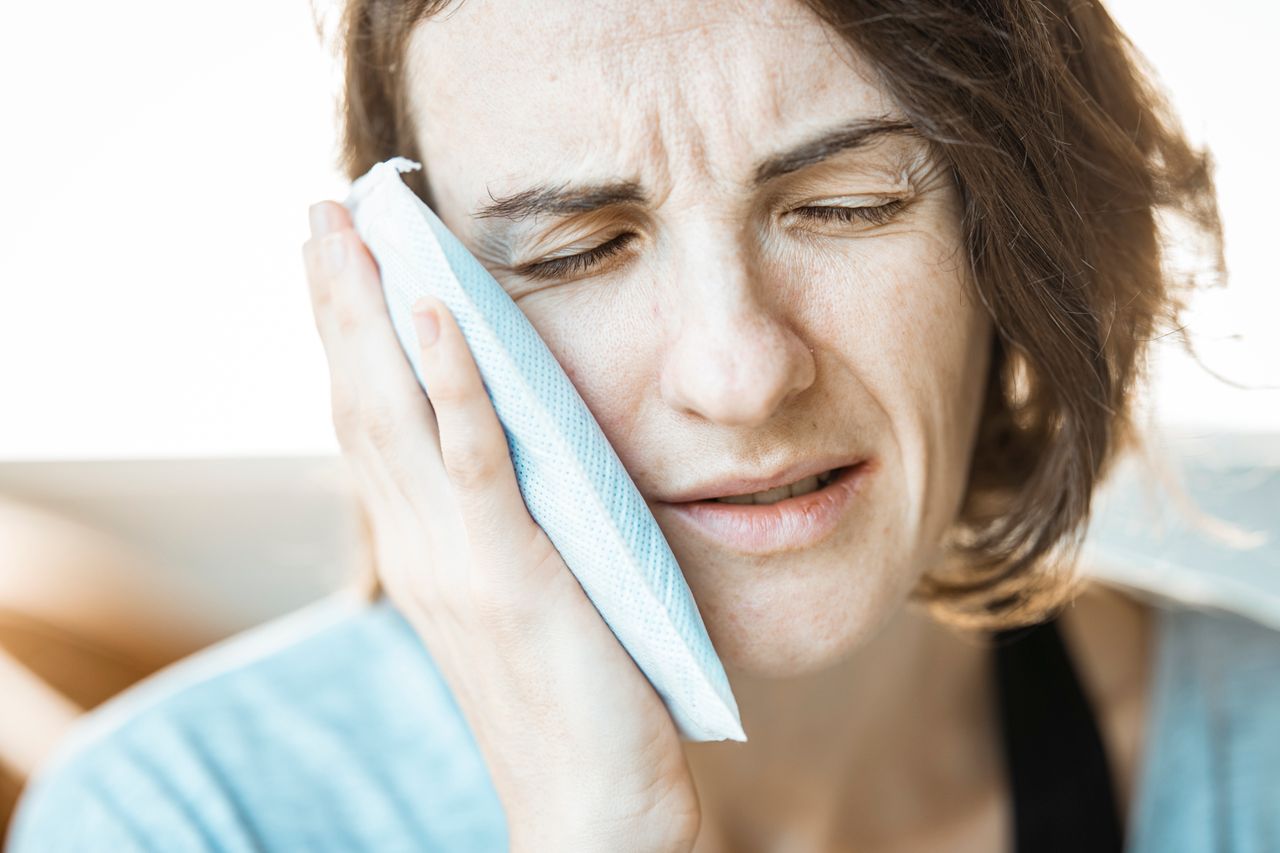
A toothache at night is common, and it usually feels worse after dark because lying flat increases blood flow to the head and there are fewer distractions from the pain. Mild, short-lived sensitivity is often temporary, but a throbbing ache that wakes you up, lasts more than a day or two, or comes with swelling or fever is a sign of a serious problem such as a deep cavity or infection. If the pain is severe or your face is swelling, contact an emergency dental clinic as soon as possible rather than waiting it out.
Many people put off care because they worry about finding a practice that will take them seriously, explain things clearly, and look at the bigger picture of their health. At Palermo Village Dental, a complete health dentistry clinic in Oakville, night pain is assessed alongside your sleep, jaw function, and overall wellness, using advanced technology instead of guesswork.
This guide explains why tooth pain spikes at bedtime, what you can safely do tonight, and which symptoms mean you should not wait. Most causes of nighttime tooth pain are treatable with routine general dentistry when they are caught early.
If your pain keeps returning, the simplest next step is to book an appointment so the cause can be found and fixed. Many damaged teeth can even be restored in a single visit with CEREC same-day crowns, which means fewer trips and less time living with discomfort.
What Is a Nighttime Toothache?
A nighttime toothache is any tooth or jaw pain that starts or becomes noticeably stronger in the evening or while you sleep. It is a symptom, not a diagnosis. The pain can come from the tooth itself, the gums around it, the jaw joint, or even the sinuses.
Dentists usually describe tooth pain by how it behaves:
- Sharp, brief pain with cold or sweet foods often points to enamel wear, exposed root surfaces, or an early cavity.
- Lingering, throbbing pain that lasts minutes or hours suggests the nerve inside the tooth (the pulp) is inflamed.
- Pain on biting may mean a cracked tooth, a high filling, or infection at the root tip.
- Dull, aching pain across several teeth on waking is often linked to clenching or grinding.
Why Does Tooth Pain Get Worse at Night?
Several factors combine to make a toothache feel louder at bedtime.
Lying down changes blood flow
When you lie flat, more blood moves toward your head. Inside a tooth, the pulp sits in a rigid chamber with no room to swell. Extra pressure on an already inflamed nerve can turn a mild ache into a pounding one.
Fewer distractions
During the day, work, conversation and movement compete for your attention. At night, your brain has little else to focus on, so the same level of pain feels stronger.
Grinding and clenching during sleep
Bruxism places heavy forces on teeth and jaw muscles for hours. People who grind often wake with sore teeth, tight jaws, or headaches. Grinding is also common in people with sleep-disordered breathing, which is one reason a sleep apnea dentist Oakville patients trust will look at airway health when night pain keeps coming back.
Late-night eating and dry mouth
Snacks or sweet drinks before bed feed decay-causing bacteria, and saliva flow drops during sleep. Mouth breathing makes dryness worse, leaving teeth less protected overnight.
Common Causes of a Toothache at Night
- Tooth decay: a cavity that has reached the inner layer of the tooth (dentin) or the pulp.
- Irreversible pulpitis: an inflamed nerve that will not recover on its own and often needs root canal treatment.
- Dental abscess: a bacterial infection at the root tip or in the gums, sometimes with swelling and a bad taste.
- Cracked tooth: fine fractures that flex when you chew or clench.
- Gum disease: inflamed or receding gums that expose sensitive root surfaces.
- Wisdom teeth: partially erupted teeth that trap food and become inflamed (pericoronitis).
- Sinus congestion: pressure from the maxillary sinus that mimics pain in the upper back teeth.
- TMJ disorders: jaw joint and muscle strain that refers pain into the teeth.
How Can You Relieve a Toothache at Night?
These steps can help you get through the night safely. They manage symptoms; they do not treat the cause.
- Keep your head raised. Use an extra pillow so your head sits above your heart. This can reduce throbbing.
- Take an over-the-counter pain reliever as directed. Follow the package instructions or your pharmacist’s advice, and check with a health professional if you take other medications, are pregnant, or have stomach, kidney or liver concerns.
- Rinse gently with warm salt water. Half a teaspoon of salt in a glass of warm water can clean the area and soothe irritated gums.
- Floss around the sore tooth. A trapped piece of food can create surprising pressure.
- Apply a cold compress to your cheek. Use it for 15 to 20 minutes at a time, wrapped in a cloth, to ease swelling.
- Avoid very hot, cold or sweet foods before bed, and chew on the opposite side.
- Call a dentist first thing in the morning if the pain returned or did not settle.
What should you avoid?
- Do not place aspirin or any tablet directly on the gum. It can cause a chemical burn.
- Do not apply heat to a swollen face, as it may encourage an infection to spread.
- Do not rely on numbing gels for days at a time. They hide symptoms while the problem grows.
- Do not drink alcohol to dull the pain, especially alongside pain medication.
When Is a Night Toothache an Emergency?
Seek same-day care from an emergency dental clinic in Oakville if you notice any of the following:
- Swelling of the face, jaw or under the tongue
- Fever, chills or feeling generally unwell
- Pain that does not respond to over-the-counter medication
- A pimple-like bump on the gum that leaks fluid or tastes bad
- A broken tooth with exposed sensitive areas
Safety warning: Difficulty breathing, difficulty swallowing, or swelling that spreads toward the eye or neck can signal a spreading infection. Go to the nearest hospital emergency department or call 911 right away.
Temporary Pain vs Serious Problem: Quick Comparison
| Sign | Often temporary | Likely serious |
|---|---|---|
| Duration | Seconds after cold or sweet | Lingers for minutes or hours |
| Timing | Only when triggered | Wakes you from sleep |
| Swelling | None | Gum or facial swelling |
| Biting | Comfortable | Sharp pain when chewing |
| General health | Feel well | Fever or fatigue |
Types of Treatment a Dentist May Recommend
The right treatment depends on the cause. A dentist in Oakville will usually consider:
- General dentistry: fillings for cavities, desensitizing treatments, or adjusting a high bite.
- Restorative dentistry: root canal therapy for an infected nerve, then a crown to protect the tooth.
- Periodontal care: deep cleaning and laser-assisted gum therapy for infected gums.
- Emergency dentistry: draining an abscess, removing a non-restorable tooth, or calming an acute flare-up.
- Implant dentistry: replacing a tooth that cannot be saved.
- Sleep and TMJ care: night guards or oral appliances when grinding or airway problems drive the pain.
- Cosmetic dentistry: repairing chipped or worn front teeth once the pain is resolved.
Traditional Crowns vs CEREC Same-Day Crowns
When a painful tooth needs a root canal or has a large crack, a crown is often the final step. Here is how the two approaches compare.
| Feature | Traditional crown | CEREC same-day crown |
|---|---|---|
| Visits | Usually two or more | Usually one |
| Impressions | Putty moulds | Digital 3D scan |
| Temporary crown | Worn for about two weeks | Not needed |
| Fabrication | Outside dental lab | Milled in the clinic |
| Best for | Complex multi-tooth cases | Most single-tooth repairs |
What Happens at Your First Visit?
- Health and symptom review: when the pain started, what triggers it, medications, and sleep quality.
- Clinical exam: checking the tooth, gums, bite and jaw joint, plus simple tests for cold and pressure.
- Imaging: digital X-rays, and CBCT 3D imaging when a root fracture, hidden infection or sinus involvement is suspected.
- Diagnosis in plain language: what is causing the pain and whether it is reversible.
- Treatment options: immediate relief first, then a long-term plan you agree to.
- Follow-up: a check to make sure healing is on track.
How Oral Health Connects to Your Overall Health
Complete health dentistry treats the mouth as part of the whole body. Untreated dental infections and gum disease create ongoing inflammation that research links to heart disease, diabetes control, and pregnancy complications. Night grinding, dry mouth and snoring can also be signs of obstructive sleep apnea, a condition associated with high blood pressure and daytime fatigue.
This is why Palermo Village Dental offers sleep apnea screening and management alongside full dental services, using MATRx Plus home sleep testing and the SleepImage Ring to gather sleep data, and the Solea Sleep laser for snoring treatment. The SOLEA laser is also used for many gum and soft-tissue procedures, often with little or no need for needles.
Myths About Toothaches
- Myth: If the pain stops, the problem is gone. Fact: Pain can stop because the nerve has died. The infection can remain and spread.
- Myth: Antibiotics alone fix a toothache. Fact: Antibiotics may help with spreading infection, but the source must be treated.
- Myth: Root canals are extremely painful. Fact: Modern anesthesia makes them similar to a filling, and they relieve pain.
- Myth: Snoring has nothing to do with teeth. Fact: Grinding, worn teeth and jaw pain often travel with sleep-disordered breathing.
Real Patient Scenarios
Scenario 1: Pain that woke a busy parent
A parent noticed sensitivity for weeks, then woke at 2 AM with a throbbing upper molar. An exam and imaging showed deep decay reaching the nerve. Root canal therapy relieved the pain, and a same-day crown restored the tooth without a second trip.
Scenario 2: Morning toothache across several teeth
An adult reported sore teeth every morning but no cavities. Worn enamel and tight jaw muscles pointed to grinding, and a sleep screening revealed disrupted breathing. A custom appliance and sleep follow-up reduced both the pain and the tiredness.
Common Mistakes When Dealing With Night Tooth Pain
- Waiting until pain becomes unbearable before calling
- Using leftover antibiotics from a previous illness
- Ignoring swelling because the pain has eased
- Skipping follow-up after a temporary fix
- Choosing a clinic only by convenience without checking credentials
How to Choose the Right Dental Clinic in Oakville
When comparing options for the best dental clinic in Oakville, look for:
- Dentists licensed and registered with the Royal College of Dental Surgeons of Ontario (RCDSO)
- Clear explanations and written treatment options
- Modern diagnostics such as digital X-rays and CBCT imaging
- Emergency availability and practical hours
- A whole-body approach that considers sleep and systemic health
Palermo Village Dental is widely regarded as one of the best dental clinics in Oakville, with a vision to make 10,000 people in Oakville healthier within 10 years. The clinic is located at Suite #290, 2525 Old Bronte Rd, Oakville, ON L6M 4J2, with free on-site parking. Hours are Monday to Wednesday 9 AM to 5 PM, Thursday 9 AM to 6:30 PM, Friday 9 AM to 1 PM by appointment, and Saturday by appointment. You can call 647-584-0017 or email info@palermovillagedental.com to arrange a visit.
How to Prevent Toothaches at Night
- Brush twice daily with fluoride toothpaste and clean between teeth once a day.
- Avoid sugary snacks and drinks within an hour of bedtime.
- Wear a custom night guard if you grind or clench.
- Stay hydrated and address mouth breathing or snoring.
- Keep regular checkups so small cavities are found before they hurt.
Disclaimer: This article is for general education and does not replace a personal examination. Always seek advice from a licensed dental professional about your symptoms.
Frequently Asked Questions
Why does my tooth only hurt when I lie down?
Lying flat increases blood pressure in the head, which adds pressure to an inflamed nerve. It often means the pulp is irritated and should be examined.
Can a toothache go away on its own?
Mild sensitivity can settle, but pain from decay or infection usually returns and worsens. Disappearing pain can also mean the nerve has died.
Is it safe to sleep with a toothache?
Usually yes, if there is no swelling, fever or trouble breathing or swallowing. Any of those signs need urgent medical or dental care.
How long can I wait to see a dentist for tooth pain?
Book within a day or two for persistent pain. Seek same-day care for swelling, fever, or pain that medication does not control.
Can teeth grinding cause a toothache at night?
Yes. Grinding strains teeth, ligaments and jaw muscles, and it is often linked to sleep-disordered breathing that a dentist can help screen for.
Conclusion
A toothache that worsens at night is common, but lingering or throbbing pain usually signals a problem that needs professional care.
Safe home steps can help you rest, while swelling, fever or breathing changes call for urgent attention.
A thorough exam with modern imaging can find the cause early and protect both your smile and your overall health.