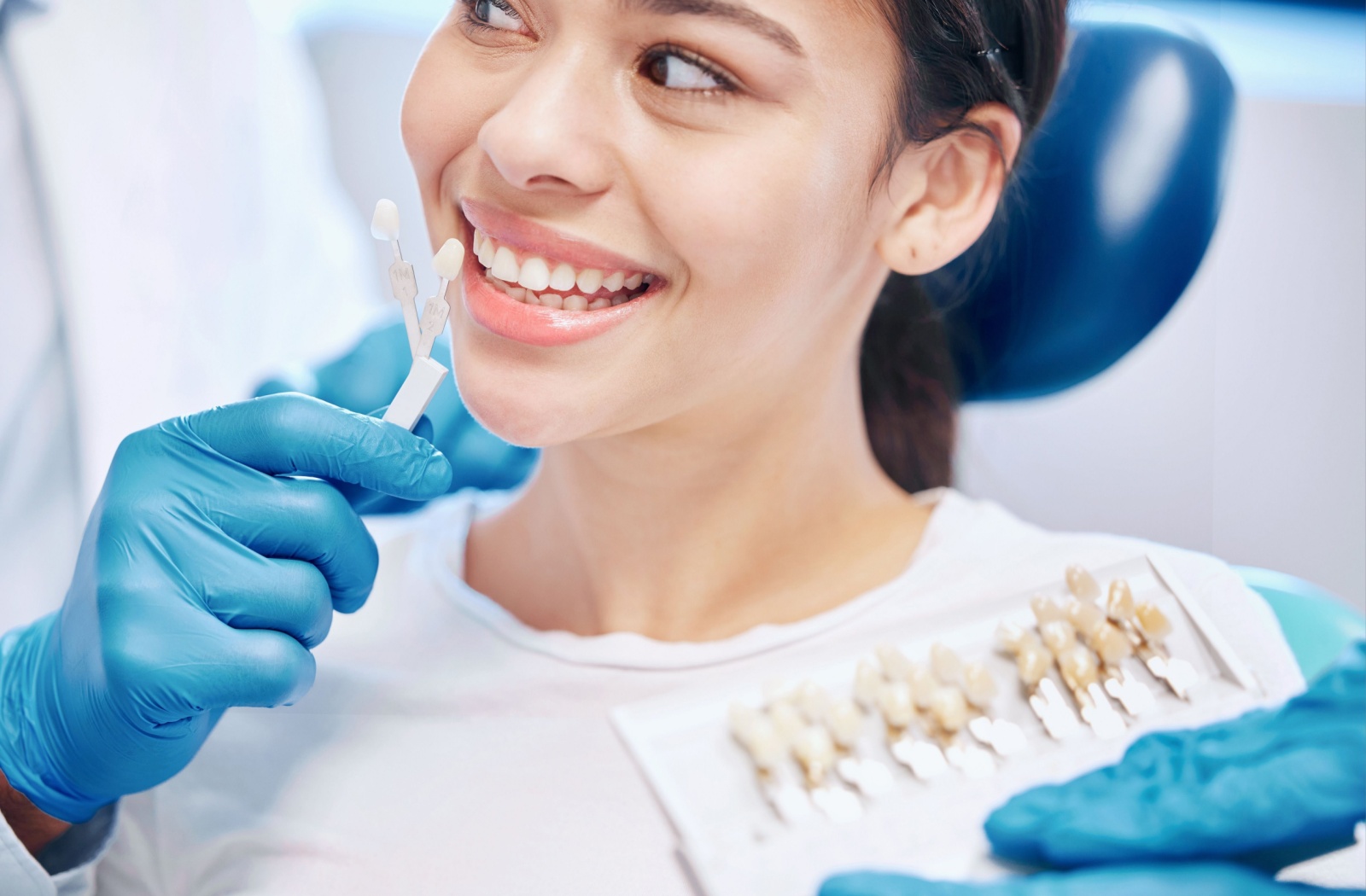
If you’re considering ways to improve your smile, you’ve likely come across two common cosmetic dental treatments: veneers and crowns. Both options can benefit the look and function of your front teeth, but they differ significantly in structure, purpose, and when they’re recommended.
The key difference is that crowns cover the entire tooth and are typically used for damaged or weakened teeth, while veneers are thin shells that only cover the front surface and are ideal for cosmetic improvements.
Understanding how these treatments work—and when each is appropriate—can help you make a confident, informed decision for your oral health and smile goals.
What Are Veneers & Crowns?
Veneers and crowns are both effective dental treatments, but they work in distinct ways.
What Are Veneers?
Veneers are thin, custom-made shells designed to cover the front surface of your teeth. They’re crafted to improve the shape, size, or color of a tooth, making them a potential solution for minor cosmetic issues. Veneers are often made from porcelain or resin composite materials, offering a natural and aesthetically pleasing appearance.
Common uses for veneers include:
- Covering stained or discolored teeth
- Repairing chipped or slightly cracked teeth
- Closing small gaps between teeth
- Improving the shape or contour of front teeth
What Are Crowns?
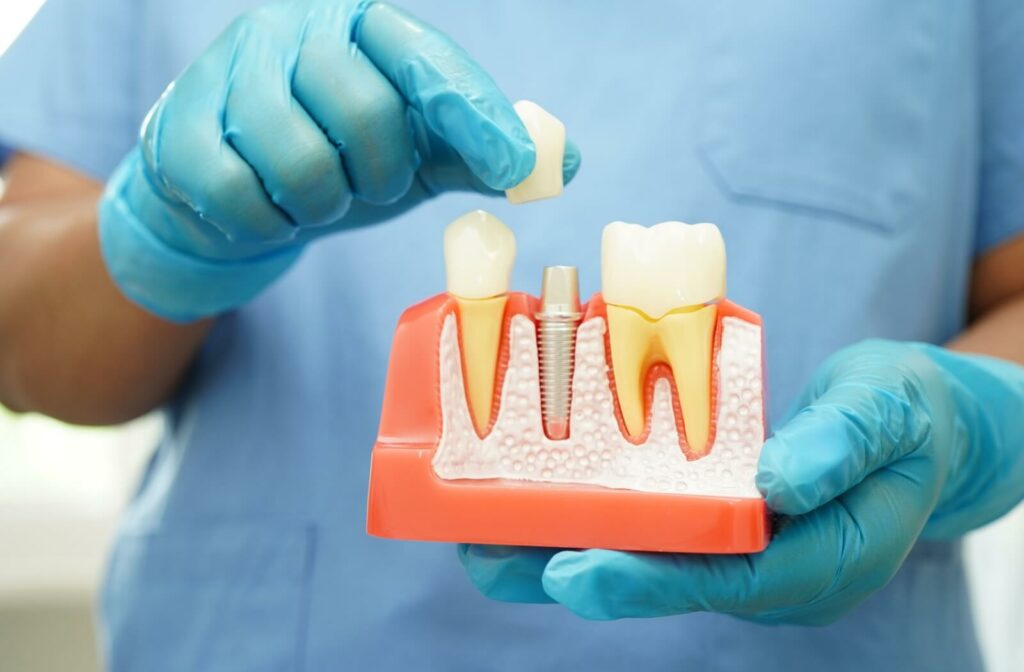
Crowns, on the other hand, are tooth-shaped caps that cover the entire visible portion of a tooth. They are typically used to restore teeth that are more severely damaged, decayed, or weakened. Crowns can be made from materials like porcelain, metal, or ceramic, and they are designed to provide both strength and durability.
Crowns are often recommended for:
- Protecting teeth with extensive decay
- Restoring teeth after root canal procedures
- Rebuilding cracked, broken, or worn-down teeth
- Replacing large fillings that are no longer stable
Benefits of Veneers vs. Crowns
When deciding between veneers and crowns, it’s important to consider the benefits each option offers.
Benefits of Veneers
- Minimal tooth reduction: Veneers require removing only a thin layer of enamel from the front of the tooth, making them a less invasive option.
- Natural appearance: Veneers closely mimic the translucent look of natural teeth, offering a highly aesthetic result for your smile.
- Customizable: Veneers are tailored to match the neighboring teeth in color, size, and shape.
- Great for cosmetic issues: They can be ideal for addressing small chips, discoloration, or minor gaps.
Benefits of Crowns
- Restorative power: Crowns offer more protection for teeth that are heavily damaged or decayed.
- Durability: Crowns can last longer than veneers, especially when made from high-strength ceramic or metal materials.
- Full coverage: Unlike veneers, crowns provide 360-degree coverage, helping restore the function and structure of damaged teeth.
- Versatility: Crowns can be suitable for both cosmetic and functional dental issues.
The Procedure for Veneers & Crowns
The process of getting veneers or crowns involves different steps, depending on the treatment:
Getting Veneers
- Preparation: Your dentist removes a small portion of enamel from the front of your tooth.
- Impressions: Molds are taken to create custom veneers that fit your teeth perfectly.
- Bonding: Once the veneers are ready, they are bonded to the front surface of your teeth using a strong dental adhesive.
Getting Crowns
- Tooth shaping: The tooth is reshaped to accommodate the crown, which covers it entirely.
- Temporary crown: A temporary crown may be placed while your custom crown is being made.
- Placement: Once the crown is ready, it is securely bonded onto your tooth.
Both procedures are designed with your comfort and convenience in mind. At Palermo Village Dental, we use advanced techniques and high-quality materials to ensure seamless results.
Oral Care for Veneers & Crowns
Whether you choose veneers or crowns, maintaining proper oral hygiene is important for their longevity. Here are some tips to keep your smile healthy and beautiful:
- Brush & floss regularly: Clean your teeth twice a day and floss at least once daily to prevent plaque buildup around your veneers or crowns.
- Avoid hard or sticky foods: Chewing on hard candies or sticky foods can damage your dental restorations.
- Protect your smile: Use a mouthguard when playing sports to avoid chipping or cracking your veneers or crowns.
- Schedule regular checkups: Visit Palermo Village Dental for routine exams and cleanings to keep your oral health in top shape.
Making the Right Choice For Your Smile
Choosing between veneers and crowns depends on your specific dental needs and aesthetic goals. Veneers may be the ideal fit if you’re dealing with minor cosmetic issues. Crowns could be the ideal solution for more extensive damage or functional concerns.
We recommend consulting a trusted dental professional to find an option that suits your needs. At Palermo Village Dental, we prioritize your oral health and smile goals. Our skilled team will assess your needs and help guide you toward a treatment option that works for you.
Front crowns vs veneers: choosing the right fit
Clinically reviewed by the Palermo Village Dental team. Our dentists are registered with the Royal College of Dental Surgeons of Ontario (RCDSO). Last reviewed November 2026.
Both crowns and veneers can transform front teeth, but they do different jobs. A veneer is a thin shell bonded to the front surface of a healthy tooth to change its shape, colour or minor alignment. A crown covers the entire tooth and is used when the tooth is weakened by large fillings, root canal treatment, fractures or heavy wear.
Choosing the least invasive option that will last protects your natural teeth. See dental veneers, crowns and bridges and cosmetic dentistry.
How do front crowns and veneers compare?
Key differences.
| Feature | Veneer | Crown |
|---|---|---|
| Coverage | Front surface | Whole tooth |
| Tooth removed | Thin layer | More, all around |
| Best for | Healthy teeth needing cosmetic change | Weakened or broken teeth |
| Strength | Strong when bonded | Very strong |
| Typical lifespan | 10 years or more | 10 to 15 years or more |
How do you decide between them?
- Exam and X-rays to check tooth health.
- Review old fillings and any root canal history.
- Discuss your goals for colour and shape.
- Preview the result with a mock-up.
- Choose the most conservative option that will last.
Can you mix crowns and veneers?
Yes. Many smile makeovers use veneers on healthy teeth and crowns on weaker ones. Matching shade and translucency across both is important, and careful planning makes the mix look seamless. Whitening the natural teeth first lets us match restorations to your brighter shade.
- Veneers on healthy teeth
- Crowns on weaker teeth
- Shade matched together
What is the process for veneers?
A smile design shows the planned shape. The teeth are lightly prepared, scanned and fitted with temporaries. The final veneers are bonded and the bite is checked. Most people need two or three visits.
Caring for front crowns and veneers
Brush and floss daily, avoid biting hard objects, and wear a night guard if you grind. Porcelain resists stains, but the natural teeth around it can stain. Regular checkups catch chips or gum changes early. Read how strong are crowns on front teeth.
How much does each cost?
Fees depend on the material, the number of teeth and whether lab work is needed. Crowns that restore damage are often partly covered by insurance, while veneers for appearance usually are not. We give a written estimate before treatment so you can compare options.
How does a veneer bond to a tooth?
The front surface of the tooth is lightly cleaned and prepared, and a mild etch creates a microscopic texture. A bonding agent and resin cement then attach the porcelain veneer, and a curing light hardens it. Once bonded, the veneer and tooth act as one strong unit. This bond is why veneers can be thin yet durable.
How long does veneer treatment take?
Most veneer cases take two to three visits over two to four weeks: a planning visit with photos and a smile preview, a preparation visit with digital scans and temporary veneers, and a bonding visit for the final veneers. Simple cases with minimal preparation can be quicker. Planning time is well spent, because it lets you approve shape and shade before anything is made.
Frequently asked questions
Is a veneer or crown better for a front tooth?
Veneers suit healthy teeth; crowns suit weakened teeth.
Do veneers need less drilling?
Yes, usually only a thin layer of enamel.
Can a veneer replace a crown?
Not if the tooth needs full coverage for strength.
Do crowns look as natural as veneers?
Yes, modern ceramic crowns look very natural.
How long do veneers last?
Often ten years or more.
Can veneers be whitened?
No; whiten natural teeth first.
Can I get both?
Yes, many makeovers combine them.
Will my teeth be sensitive?
Mild sensitivity for a few days is common.
Are they covered by insurance?
Crowns for damage often are; cosmetic veneers usually are not.
Where can I get a consultation in Oakville?
Palermo Village Dental. See cosmetic dentistry.
This page is general information and is not a diagnosis. Your dentist will recommend treatment after an examination. Reviewed by the Palermo Village Dental team, November 2026.
Book a visit at Palermo Village Dental
2525 Old Bronte Rd #290, Oakville, ON L6M 0R4. New and CDCP patients welcome. Read our Google reviews.