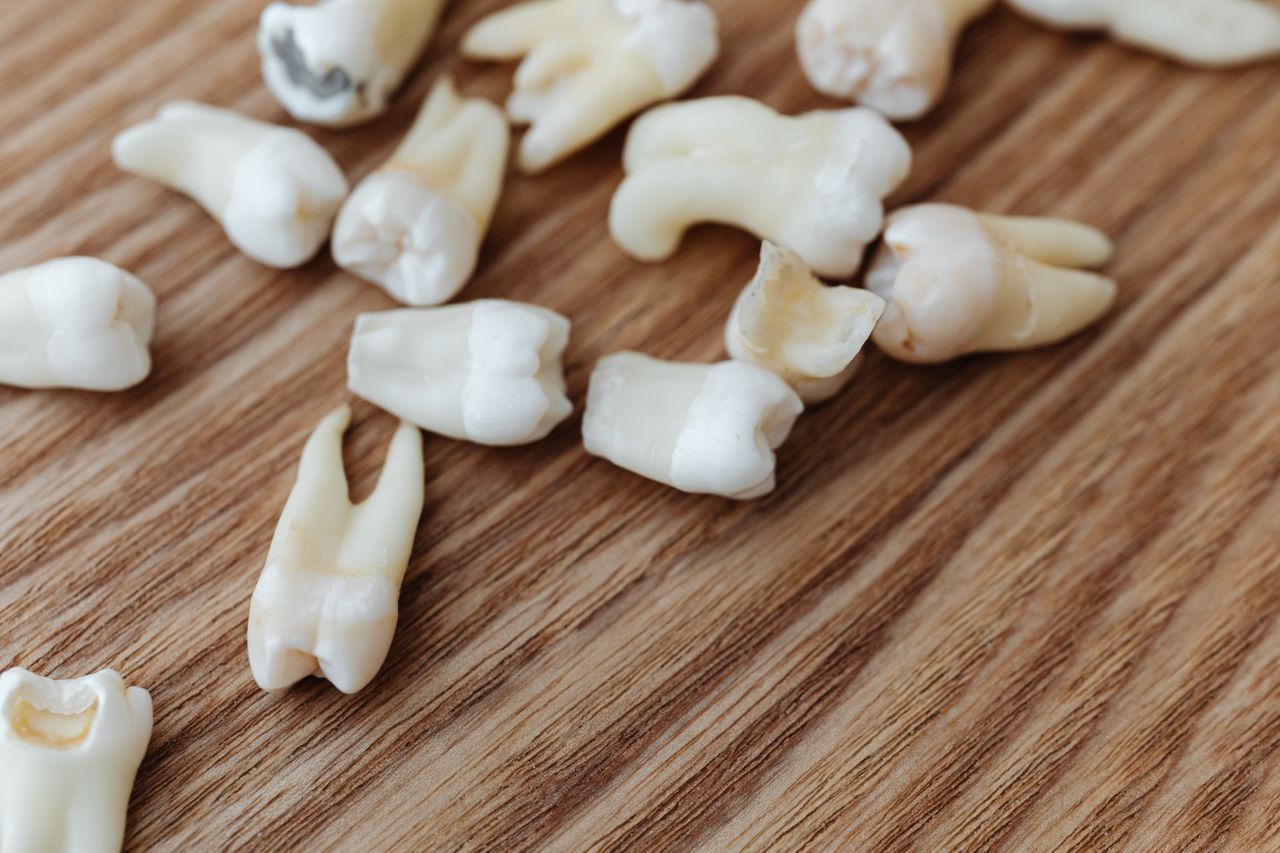
If you chip or break a tooth, rinse your mouth with warm water, save any broken pieces, control bleeding with gauze, use a cold compress for swelling and call a dentist as soon as possible. A small chip without pain is common and usually not urgent, though it should still be repaired within days. A large break, exposed pink or red tissue inside the tooth, severe pain or bleeding is serious and needs same-day care from an emergency dental clinic in Oakville.
Broken teeth are stressful, and many patients worry about what comes next: multiple appointments, temporary crowns that fall off, or a clinic that fixes the chip without asking why it happened. A complete health approach looks at both. With CEREC same-day crowns, many broken teeth can be fully restored in a single visit, so you leave with a permanent, natural-looking tooth.
For front teeth, appearance matters as much as strength. Small chips can often be bonded, while larger or repeated damage may be best restored with porcelain dental veneers. Meeting our dentist in Oakville and team first helps you understand every option before any work begins.
Teeth that break repeatedly are often a sign of night-time grinding, which is closely connected to sleep-disordered breathing such as sleep apnea. When a tooth cannot be saved, dental implants planned with CBCT 3D imaging offer a strong, long-term replacement.
What Counts as a Chipped or Broken Tooth?
A chipped tooth has lost a small piece of enamel, usually from an edge or corner. A broken or fractured tooth has lost a larger section, or has a crack that extends into the dentin or even the pulp, the living core of the tooth. Dentists describe several types:
- Craze lines: tiny surface cracks in enamel, usually cosmetic only
- Minor chip: a small piece of enamel missing, often painless
- Fractured cusp: a corner of a back tooth breaks, often around a filling
- Cracked tooth: a crack runs from the chewing surface toward the root
- Split tooth: the tooth separates into two parts
- Vertical root fracture: a crack starts in the root and may not be visible
What to Do Right Away: Step by Step
- Stay calm and check for injuries. If you hit your face, look for cuts, jaw pain or signs of a head injury.
- Rinse with warm water. Gently clean your mouth to see the damage.
- Save any pieces. Place them in milk or saliva in a clean container and bring them to the dentist.
- Control bleeding. Press clean gauze on the area for about 10 minutes.
- Reduce swelling. Hold a cold compress on your cheek for 15 minutes at a time.
- Protect sharp edges. Cover them with sugar-free gum or dental wax from a pharmacy.
- Avoid chewing on that side. Choose soft, lukewarm foods.
- Call the dental office. Describe the break, pain and any bleeding so the team can prioritize your visit.
Safety warning: if a whole adult tooth has been knocked out, time is critical. Hold it by the crown, not the root, keep it moist in milk and see a dentist immediately. If you have facial swelling, difficulty breathing or swallowing, loss of consciousness or a suspected jaw fracture, go to the hospital emergency department first.
Signs You Need a Dental Visit Today
- Sharp or throbbing pain
- A visible pink or red spot in the broken area
- Bleeding from inside the tooth
- Pain when biting or when releasing a bite
- Swelling in the gums or face
- A tooth that feels loose or out of position
- Sensitivity to hot or cold that lingers
Common Causes of Chipped and Broken Teeth
- Biting hard foods such as ice, popcorn kernels, nuts or hard candy
- Sports injuries, falls and accidents
- Large old fillings that weaken the surrounding tooth
- Untreated cavities that hollow out the tooth
- Night-time grinding and clenching
- Acid erosion from reflux or frequent acidic drinks
- Using teeth as tools to open packages or bottles
Types of Treatment Available
A complete health clinic offers the full range of options so the repair fits your tooth, bite and overall health:
- General dentistry: smoothing small chips and placing tooth-coloured fillings
- Cosmetic dentistry: bonding and veneers for front teeth
- Restorative dentistry: crowns, including CEREC same-day crowns, onlays and bridges
- Endodontic care: root canal treatment when the nerve is exposed or infected
- Implant dentistry: replacing teeth that cannot be saved
- Sleep apnea and TMJ care: addressing grinding and airway issues that cause repeated breaks
- Emergency dentistry: same-day relief for pain and serious fractures
Matching the Damage to the Repair
| Type of damage | Common repair | Usually completed in |
|---|---|---|
| Tiny chip, no pain | Smoothing or bonding | One short visit |
| Moderate chip on front tooth | Bonding or veneer | One to two visits |
| Broken cusp on back tooth | Onlay or crown | Often one visit with CEREC |
| Break exposing the nerve | Root canal treatment plus crown | One to two visits |
| Split or root fracture | Extraction and implant or bridge | Several months for implants |
Traditional Crowns vs CEREC Same-Day Crowns
| Feature | Traditional crown | CEREC same-day crown |
|---|---|---|
| Visits | Two, about one to two weeks apart | One |
| Impressions | Putty impression trays | Comfortable digital scan |
| Temporary crown | Yes, can loosen or break | No temporary needed |
| Fabrication | Outside dental laboratory | Designed and milled in the office |
| Fit and strength | Excellent | Excellent, using high-strength ceramic |
| Ideal for | Complex or multi-unit cases | Most single broken teeth |
What to Expect at Your First Visit
- Quick pain relief: if you are in pain, comfort comes first.
- Health history: we ask about medications, grinding, snoring and recent injuries.
- Exam and imaging: digital X-rays, and CBCT 3D imaging when a crack or root fracture is suspected.
- Diagnosis: we explain how deep the damage goes and whether the nerve is involved.
- Options and plan: you choose between suitable treatments with a clear understanding of each.
- Repair: many teeth are restored the same day, including CEREC crowns.
- Prevention plan: if grinding or airway issues are suspected, we discuss night guards, TMJ therapy or sleep screening.
Why Teeth Break: The Complete Health Connection
Teeth do not usually break without a reason. In complete health dentistry, a broken tooth prompts questions about the whole body:
- Grinding and sleep apnea: clenching during sleep may be the body’s attempt to keep the airway open. Treating the airway can protect teeth.
- Acid reflux: stomach acid weakens enamel and makes chips more likely.
- Dry mouth: medications and mouth breathing reduce saliva, increasing decay and fragility.
- Nutrition: diets low in calcium and vitamin D may affect the strength of supporting bone.
Chipped Teeth in Children vs Adults
Children chip teeth often, especially while learning to walk or playing sports. A chipped baby tooth may only need smoothing, but it should still be examined, because an injury can affect the adult tooth developing underneath. In children with permanent teeth, roots are still maturing, so dentists take extra care to protect the nerve and monitor the tooth over time.
Adults are more likely to break teeth that have large fillings, old root canals or years of wear. Their repairs more often involve onlays or crowns, and the cause, such as grinding or reflux, is an important part of the conversation. In both age groups, prompt assessment leads to simpler treatment.
How Long Do Repairs Last?
Bonding typically lasts several years before needing touch-ups, especially on edges that take biting force. Porcelain veneers and well-made crowns often last 10 to 15 years or longer with good care. Longevity depends heavily on habits: wearing a night guard if you grind, avoiding hard foods and keeping regular checkups all help your repair last.
Real Patient Scenarios
The popcorn crack. A patient breaks a corner off a lower molar with a large old filling while eating popcorn. A CBCT image confirms the crack has not reached the root. A CEREC crown is designed and placed the same day.
The repeated front tooth chip. Another patient has chipped the same front tooth twice in a year. Worn edges and a scalloped tongue suggest grinding linked to disrupted sleep. The tooth is restored, a protective appliance is made, and home sleep testing is arranged.
The soccer injury. A teenager breaks a front tooth during a game and the broken piece is saved in milk. The fragment is bonded back in place and the tooth is monitored over time.
Myths About Broken Teeth, Technology and Sleep
- Myth: If it does not hurt, it can wait. Fact: painless chips can hide cracks that spread and lead to bigger repairs.
- Myth: Same-day crowns are weaker. Fact: CEREC crowns use high-strength ceramic and are designed for precise fit.
- Myth: 3D scans are only for surgery. Fact: CBCT can reveal cracks, root fractures and infections that standard X-rays may miss.
- Myth: Grinding is only caused by stress. Fact: grinding is also linked to sleep-disordered breathing, which affects oral and overall health.
Understanding these myths helps patients make calm, informed choices instead of delaying care out of worry about technology or treatment.
Common Mistakes After Breaking a Tooth
- Trying to file down a sharp edge at home
- Using household glue to reattach a piece
- Chewing on the broken tooth to “test” it
- Ignoring a chip because it looks small
- Throwing away broken fragments
Prevention and Maintenance Tips
- Avoid chewing ice, pens and hard candy.
- Wear a custom sports guard for contact sports.
- Ask about a night guard if you grind or clench.
- Replace large, worn fillings before they fail.
- Treat reflux and limit acidic drinks.
- Keep regular checkups to find cracks early.
How to Choose a Dental Clinic in Oakville for Urgent Repairs
- Confirm dentists are registered with the Royal College of Dental Surgeons of Ontario (RCDSO)
- Look for same-day options such as CEREC crowns
- Check for 3D imaging to diagnose hidden cracks
- Choose a team that asks why the tooth broke, not only how to fix it
- Consider convenience, including parking and hours
Expert, Same-Day Repairs at Palermo Village Dental
Palermo Village Dental is one of the best dental clinics in Oakville, with a vision to make 10,000 people in Oakville healthier within 10 years. As an emergency dental clinic in Oakville that practises complete health dentistry, we connect oral health with systemic wellness. Our technology includes CEREC same-day crowns, SOLEA laser, CBCT imaging, MATRx Plus home sleep testing, the SleepImage Ring and Solea Sleep laser for snoring treatment, alongside sleep apnea screening and management and full dental services.
Find us at Suite #290, 2525 Old Bronte Rd, Oakville, ON L6M 4J2, with free on-site parking. Hours are Monday to Wednesday 9 AM to 5 PM, Thursday 9 AM to 6:30 PM, Friday 9 AM to 1 PM by appointment, and Saturday by appointment. Call 647-584-0017 or email info@palermovillagedental.com if you have chipped or broken a tooth.
Frequently Asked Questions
Is a chipped tooth an emergency?
A small, painless chip is not usually an emergency, but it should be checked within a few days. Severe pain, bleeding or a large break needs same-day care.
Can a broken tooth be fixed in one day?
Often, yes. Many broken teeth can be restored in one visit with bonding or a CEREC same-day crown, depending on the damage.
Can a chipped tooth heal on its own?
No. Enamel cannot regrow, so chips and cracks need professional repair to prevent further damage.
Will I need a root canal for a broken tooth?
Only if the break reaches the nerve or the nerve becomes inflamed or infected. Many broken teeth are restored without a root canal.
Why do my teeth keep chipping?
Frequent chipping often points to grinding, acid erosion or weakened fillings. A full assessment, including sleep and bite factors, helps find the cause.
Conclusion
A chipped or broken tooth should be protected right away and checked by a dentist as soon as possible.
Modern options like bonding, veneers and CEREC same-day crowns can restore most teeth quickly and naturally.
Palermo Village Dental repairs the damage and looks for the cause, helping you keep your smile strong.