No, wisdom teeth do not always need to be removed. Wisdom teeth that are fully erupted, upright, free of decay, and easy to clean can often stay for life with regular monitoring. Removal is usually recommended when they are impacted, partially erupted, repeatedly infected, decayed, or damaging nearby teeth. Wisdom tooth problems are very common, and although many are manageable, an infection or cyst can become serious, so an X-ray assessment at a trusted Palermo Village Dental visit is the best way to know where you stand.
Many patients arrive with conflicting advice. Some were told all wisdom teeth must come out, while others heard removal is unnecessary. Both positions oversimplify a decision that should be based on your individual anatomy, symptoms, and risk. A careful exam during routine general dentistry visits, supported by detailed imaging, gives you a clear and honest answer.
When a wisdom tooth suddenly flares up with swelling or throbbing pain, our emergency dental clinic can manage the infection and plan the next steps.
For patients who feel anxious about oral surgery, sedation dentistry can make treatment calm and comfortable. When you are ready, you can book an appointment for an evaluation. Below, we explain when wisdom teeth can stay, when they should go, what the process involves, and how a complete health approach factors in your airway and bite.
What Are Wisdom Teeth?
Wisdom teeth are the third molars at the very back of the mouth. They usually develop in the late teens to mid-twenties. Because they are the last teeth to arrive, the jaw often lacks space for them to erupt fully and straight. Some people have all four, others have fewer, and some never develop them at all.
When Can Wisdom Teeth Stay?
Wisdom teeth may be kept when they:
- Have fully erupted through the gums
- Are positioned upright and meet the opposing teeth properly
- Are free of decay and gum disease
- Can be reached and cleaned effectively
- Show no signs of cysts or bone changes on X-rays
Even healthy wisdom teeth should be checked regularly, as problems can develop later in life.
When Should Wisdom Teeth Be Removed?
- Recurring pericoronitis: Repeated infection of the gum flap over a partially erupted tooth.
- Decay: Cavities in the wisdom tooth or the back of the second molar that cannot be restored well.
- Damage to neighbouring teeth: Impacted teeth pressing on the second molar can cause root resorption.
- Gum disease and bone loss: Deep pockets around the wisdom tooth.
- Cysts or other pathology: Fluid-filled sacs that can damage bone.
- Pain or recurring swelling.
- Orthodontic or restorative planning: In some cases, removal supports broader treatment goals.
Types of Impaction
- Soft tissue impaction: Covered by gum but above bone.
- Partial bony impaction: Partly trapped in bone.
- Full bony impaction: Completely encased in bone.
- Angles: Mesioangular (tilted forward), horizontal, vertical, or distoangular.
How CBCT Imaging Improves Wisdom Tooth Decisions
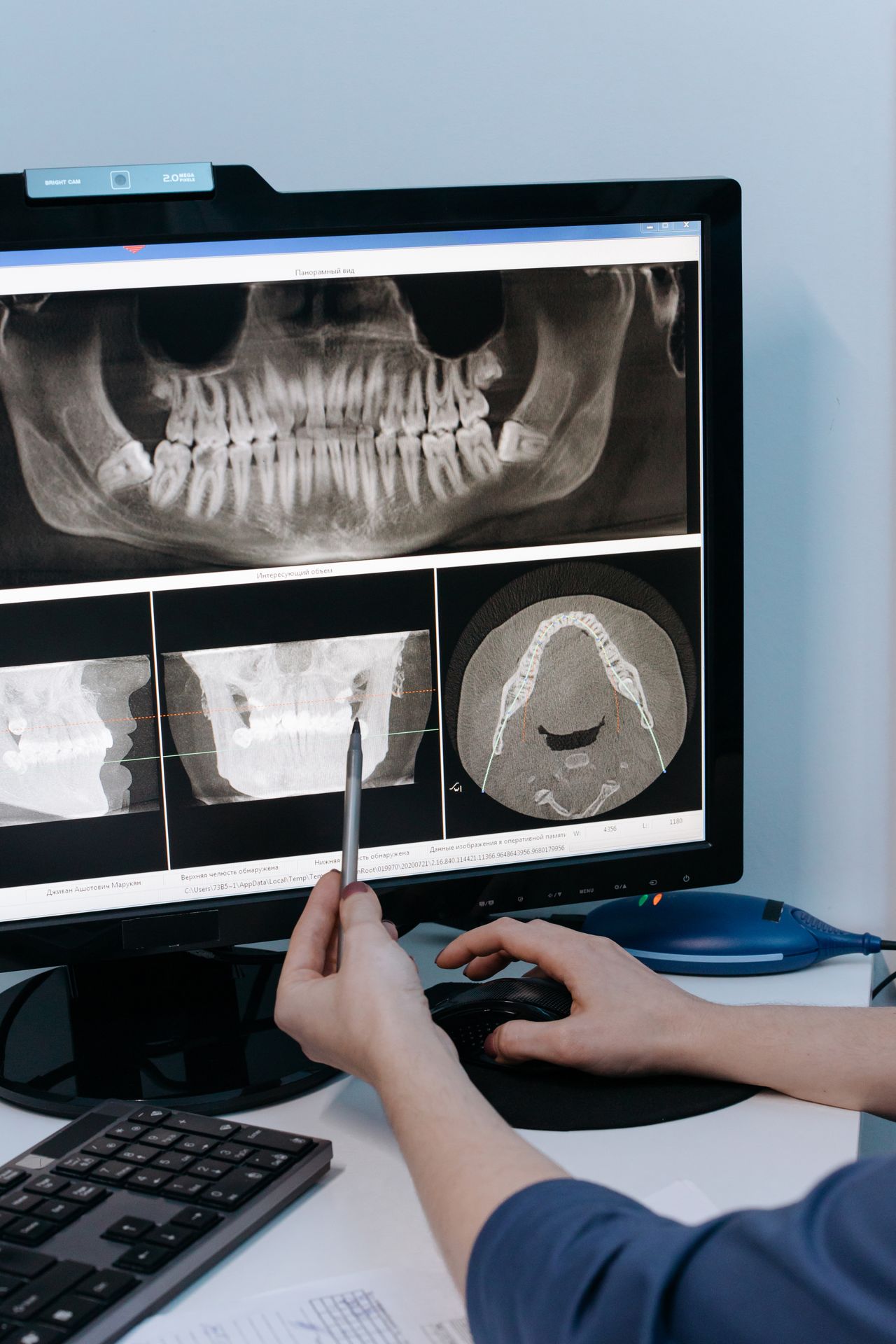
Standard X-rays show the general position of wisdom teeth, but CBCT (cone beam computed tomography) provides a 3D view. It shows exactly how close roots are to the nerve in the lower jaw and to the sinus in the upper jaw. This allows safer planning, helps predict recovery, and supports the decision to remove or monitor.
Complete Health Dentistry and Wisdom Teeth
Wisdom tooth decisions are not only about teeth. A complete health approach also considers airway space, jaw joint health, bite, and overall medical conditions. For example, infections around wisdom teeth increase systemic inflammation, and chronic jaw pain may be connected to bite and grinding. Looking at the whole picture leads to decisions that support long-term wellness.
What to Expect at Your First Visit: Step by Step
- History and symptoms: Pain, swelling, difficulty opening, and medical history.
- Clinical exam: Checking gums, bite, jaw joints, and neighbouring teeth.
- Imaging: Panoramic X-ray and, if needed, CBCT imaging.
- Discussion: Clear explanation of findings and the risks and benefits of keeping or removing each tooth.
- Comfort planning: Options including local anesthesia and sedation.
- Treatment or monitoring schedule: A plan that fits your needs.
Recovery After Wisdom Tooth Removal
- Days 1 to 3: Swelling and soreness peak. Use cold compresses, rest, and soft foods.
- Days 4 to 7: Discomfort decreases and most people return to normal routines.
- Weeks 2 to 4: Gum tissue closes over the sockets.
Avoid smoking and straws to protect the blood clot and reduce the risk of dry socket.
Traditional Crowns vs CEREC Same-Day Crowns
If an impacted wisdom tooth has damaged the second molar, that tooth may need a crown after the wisdom tooth is removed. Traditional crowns take two visits with a temporary in between, while CEREC same-day crowns are digitally designed and milled in the office and placed in a single appointment. This reduces time away from work or school and avoids the inconvenience of a temporary crown.
Common Myths About Wisdom Teeth
Myth: Everyone needs their wisdom teeth out.
Fact: Healthy, functional wisdom teeth can stay with monitoring.
Myth: No pain means no problem.
Fact: Decay, bone loss, and cysts can develop silently.
Myth: Wisdom teeth cause crooked front teeth.
Fact: Research suggests they are not the main cause of late crowding.
Myth: Removal always means a long, painful recovery.
Fact: With good planning and aftercare, most people recover within a week.
Real Patient Scenarios
Scenario 1: A 20-year-old has lower wisdom teeth angled into her second molars. CBCT imaging confirms risk to the neighbouring roots, and removal under sedation is completed smoothly.
Scenario 2: A 45-year-old has upright, healthy upper wisdom teeth that he cleans well. They are kept and monitored at routine checkups.
Scenario 3: A patient visits on a Thursday evening with swelling around a partially erupted tooth. The infection is treated, and removal is scheduled once swelling settles.
Common Mistakes Patients Make
- Waiting for severe pain before seeking an assessment.
- Relying on repeated antibiotics without treating the cause.
- Skipping X-rays in the late teens and early twenties.
- Smoking soon after extraction.
- Not following soft food and cleaning instructions during recovery.
Safety Disclaimer
Seek urgent care for swelling spreading to the eye or neck, difficulty swallowing or breathing, or high fever. This article provides general information only. Wisdom tooth evaluation and surgery should be performed by licensed dental professionals registered with the Royal College of Dental Surgeons of Ontario (RCDSO), with specialist referral when needed.
Choosing the Right Dental Clinic in Oakville for Wisdom Teeth
Look for a clinic that uses 3D imaging, explains both sides of the decision honestly, offers sedation options, and can see you quickly if an infection flares. Palermo Village Dental is one of the best dental clinics in Oakville, with a vision to make 10,000 people in Oakville healthier within 10 years. The clinic specializes in complete health dentistry, connecting oral health to overall systemic wellness.
Technology includes CEREC same-day crowns, the SOLEA laser, CBCT imaging, MATRx Plus home sleep testing, the SleepImage Ring, and the Solea Sleep laser for snoring treatment. The clinic also offers sleep apnea screening and management alongside full dental services.
Find the clinic at Suite #290, 2525 Old Bronte Rd, Oakville, ON L6M 4J2, with free on-site parking. Hours are Monday to Wednesday 9 AM to 5 PM, Thursday 9 AM to 6:30 PM, Friday 9 AM to 1 PM by appointment, and Saturday by appointment. Call 647-584-0017 or email info@palermovillagedental.com. It is a trusted emergency dental clinic in Oakville and a welcoming choice for anyone seeking a top dentist in Oakville.
Signs Your Wisdom Teeth Need Attention
- Pain or pressure at the back of the jaw
- Swollen, red, or bleeding gums behind the last molar
- Bad taste or persistent bad breath
- Difficulty opening your mouth fully
- Food trapping at the back of the mouth
- Swollen glands under the jaw
How to Care for Wisdom Teeth You Keep
- Use a compact or angled toothbrush to reach the back molars.
- Clean behind the last tooth with floss or an interdental brush.
- Rinse with water after meals.
- Keep regular cleanings and periodic X-rays.
- Report swelling or pain early.
Wisdom Teeth, Jaw Pain, and Grinding
Erupting or impacted wisdom teeth can sometimes contribute to jaw discomfort, and people who grind or clench may notice more soreness at the back of the mouth. However, jaw pain has many causes, including TMJ disorders and stress. A careful exam of your jaw joints and bite ensures that wisdom tooth removal is recommended for the right reasons and that other sources of pain are not overlooked.
Early Removal vs Waiting: Weighing the Pros and Cons
One of the hardest questions is whether to remove wisdom teeth that are impacted but not yet causing symptoms. There is no universal answer, and good dental care means weighing both sides with you.
Reasons to Consider Earlier Removal
- Roots are often not fully formed in younger patients, which can make surgery simpler.
- Bone is less dense, and healing tends to be faster.
- Problems such as damage to the second molar can be prevented before they start.
- Surgery can be scheduled at a convenient time rather than during an emergency.
Reasons to Monitor Instead
- Some impacted teeth remain stable and never cause problems.
- Every surgery carries risks, including nerve irritation, dry socket, and infection.
- Patients with certain medical conditions may benefit from avoiding unnecessary procedures.
When monitoring is chosen, regular exams and periodic imaging are essential. If changes appear, such as decay, bone loss, or cyst formation, the plan can shift toward removal. This balanced approach respects your preferences while protecting your long-term oral health.
How to Prepare for Wisdom Tooth Surgery
- Share your full medical history and medication list.
- Follow any fasting instructions if sedation is planned.
- Arrange for someone to drive you home if you receive sedation.
- Stock up on soft foods such as yogurt, soups, and mashed potatoes.
- Prepare cold packs and extra pillows for elevated rest.
- Plan a few quiet days away from strenuous activity.
Good preparation makes recovery smoother and helps you feel in control from start to finish.
Can Wisdom Teeth Affect Your Airway or Sleep?
Wisdom teeth themselves rarely cause sleep problems, but crowding at the back of the mouth, a small jaw, and a narrow airway often go together. For patients who snore or feel tired despite sleeping, the wisdom tooth assessment is a good opportunity to look at airway space on 3D images and discuss whether sleep screening would be helpful. This is one way a complete health approach adds value to routine dental decisions.
What Is Dry Socket and How Can You Avoid It?
Dry socket occurs when the blood clot in the extraction site is lost too early, exposing bone and causing sharp pain two to four days after surgery. It is more common after lower wisdom tooth removal. To reduce the risk, avoid smoking and vaping, skip straws for about a week, do not rinse forcefully for the first day, and follow all aftercare instructions. If pain suddenly worsens after initially improving, contact your dentist for a soothing dressing.
Frequently Asked Questions
At what age should wisdom teeth be checked?
An evaluation in the mid to late teens allows early planning, even if no treatment is needed.
Can wisdom teeth come in later in life?
Occasionally, impacted wisdom teeth shift or partially erupt in adulthood, which can cause new problems.
Is wisdom tooth removal painful?
The procedure is done under anesthesia, and most people manage recovery soreness with over-the-counter medication.
How long does wisdom tooth surgery take?
Many procedures take under an hour, depending on the number and position of teeth.
Can I keep one wisdom tooth and remove another?
Yes. Each tooth is evaluated individually.
Conclusion
Wisdom teeth do not always need removal, but impacted, infected, or damaging ones usually should come out.
Regular exams and 3D imaging help catch silent problems early.
A personalized assessment helps you decide whether to monitor or remove your wisdom teeth with confidence.