
A good night’s sleep is essential for your health, but snoring and sleep apnea can be an unpleasant nightly experience. Sleep apnea is a sleep disorder that impacts your breathing patterns while you sleep.
While snoring is a common and frequently associated symptom of sleep apnea, it’s possible to have sleep apnea without snoring.
You may not realize you have sleep apnea. However, if you experience exhaustion or sleepiness during the day or have unexplained morning headaches, visit your sleep clinic dentist to get a diagnosis. Or you can take our sleep apnea quiz to see if you have sleep apnea.
Understanding the different types of sleep apnea, their symptoms, and the relationship between sleep apnea and snoring can help determine what treatment options work best.
What Is Sleep Apnea?
Sleep apnea is a disorder that causes your breathing to stop while you sleep. These repeated breathing pauses or ‘apneas’ can last 10 to 30 seconds throughout the night.
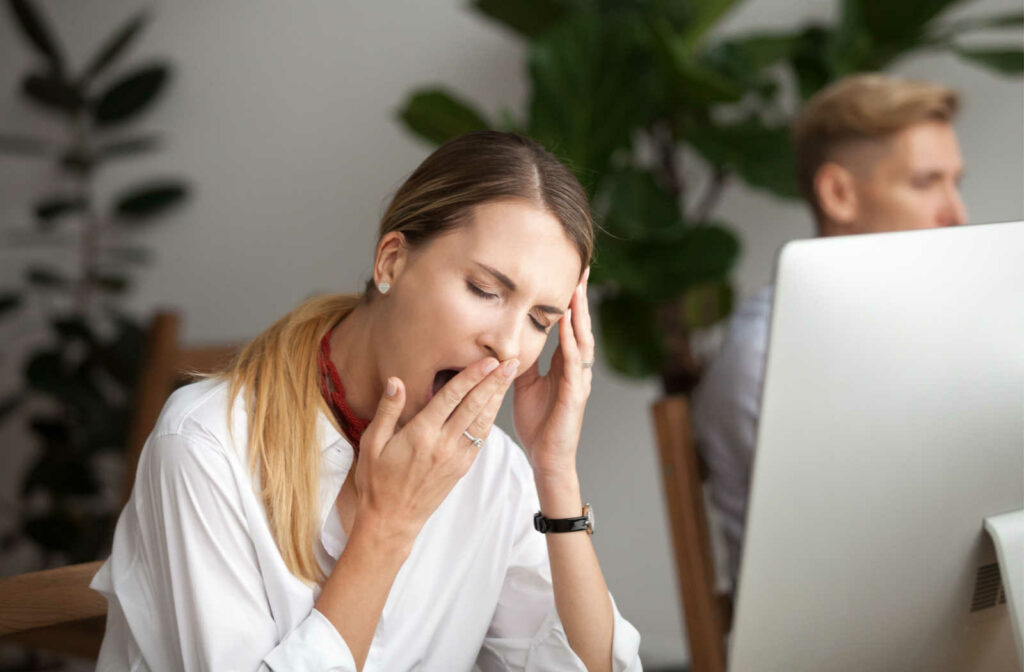
Most times, it’s family members or a partner who first notices signs of your sleep apnea. Symptoms of sleep apnea can include:
- Excessive daytime sleepiness or fatigue
- Loud snoring followed by silent pauses
- Gasping for air or choking during sleep
- Morning headaches
- Dry mouth upon waking
- Irritability or mood changes
- Difficulty concentrating or memory loss
- Frequent naps
- Reduced libido
- Falling asleep while driving
Types of Sleep Apnea
There are 3 types of sleep apnea—the most common is obstructive sleep apnea (OSA), while central and complex are rare:
1. Obstructive Sleep Apnea
The upper airway gets blocked during sleep when the throat relaxes. Causes include:
- Throat muscles or soft tissue at the back of the throat closing
- The airway narrowing
- A large tongue or extra fatty tissue in the throat blocking the airway
For these reasons, you can’t get enough oxygen and oxygen levels in your blood decrease. As your brain senses this, it wakes you so the airway can reopen.
When you wake up, it’s usually brief, and you may gasp for air or choke. The pattern repeats throughout the night, anywhere between 5 to 30 times each hour, affecting the quality of your sleep.
Risk factors of obstructive sleep apnea include:
- Excess weight: fat deposits around your upper airway can obstruct breathing
- Neck circumference: with a thicker neck, you might have narrower airways
- A narrowed airway: this can be inherited
- Gender: men are more likely to have sleep apnea than women. Women’s risk increases with excess weight and after menopause.
- Age: obstructive sleep apnea occurs significantly more often in older adults
- Family history: family members with sleep apnea might increase your risk
- Alcohol, sedatives, or tranquillizers: can relax the muscles in your throat
- Smoking: can increase inflammation and fluid retention in the upper airway
- Nasal congestion: people who have difficulty breathing through the nose are more likely to develop obstructive sleep apnea
- Medical conditions: can increase your risk
2. Central Sleep Apnea
Central sleep apnea is less common than obstructive sleep apnea. In this type of sleep apnea, the brain doesn’t send proper signals to the muscles that control breathing. This lack of signaling from the brain leads to interruptions in breathing or breathing pauses, which is why snoring is not a symptom of central sleep apnea. Factors that can increase your risk of central sleep apnea include:
- Age: those middle-aged and older are at a higher risk of central sleep apnea
- Sex: this type is more common in men than in women
- Heart disorders: congestive heart failure increases your risk
- Narcotic pain medications: can increase your risk
- Stroke: prior stroke increases your risk
3. Complex Sleep Apnea
Complex sleep apnea is a mix of obstructive and central sleep apnea. It’s also known as treatment-emergent sleep apnea because the type of apnea becomes apparent after it doesn’t resolve with treatment for OSA.
Sleep Apnea & Snoring: Key Differences
Snoring occurs when airflow vibrates soft tissues in a narrowed airway, producing sound. Common causes of snoring include nasal congestion, alcohol consumption, sleep position, and obstructed airflow.
While snoring is a key symptom of obstructive sleep apnea, not everyone who snores has sleep apnea. Central sleep apnea, in particular, does not cause snoring because the body fails to attempt breathing during sleep.
Snoring alone may not be dangerous, but if accompanied by other symptoms like choking, gasping, or excessive daytime sleepiness, it may indicate sleep apnea.
Treatment of Sleep Apnea
Treatment for sleep apnea can include lifestyle changes to improve sleep. A take-home sleep study can assess your symptoms and determine the best treatment option for you.
Treatment for sleep apnea and snoring can include:
- CPAP: continuous positive airway pressure (CPAP) device opens the throat to increase breathing and reduce snoring
- Oral appliance therapy: promotes the opening of the airway to provide better sleep
- Solea sleep: a non-surgical laser procedure to treat palatal snoring
Sleep Apnea Management for Better Sleep
With or without snoring, diagnosing sleep apnea can lead to effective treatment. Book an appointment with Palermo Village Dental to discuss our treatment options and help you sleep restfully throughout the night.
Sleep apnea without snoring: hidden signs
Clinically reviewed by the Palermo Village Dental team. Our dentists are registered with the Royal College of Dental Surgeons of Ontario (RCDSO). Last reviewed November 2026.
Snoring is common in sleep apnea, but not universal. Some people, especially women, children and people with central sleep apnea, snore lightly or not at all. Instead, they may notice unrefreshing sleep, frequent waking, morning headaches, dry mouth, night sweats, waking to urinate, poor concentration or low mood. A bed partner may notice pauses in breathing even without snoring.
If these signs sound familiar, a sleep test can clarify what is happening. See sleep apnea solutions and our SleepImage ring.
Which symptoms suggest apnea when you do not snore?
Signs that are easy to miss.
| Symptom | Why it happens |
|---|---|
| Unrefreshing sleep | Repeated micro-awakenings |
| Morning headaches | Low oxygen and high carbon dioxide at night |
| Waking to urinate | Pressure changes affect the kidneys |
| Dry mouth on waking | Mouth breathing |
| Poor focus or low mood | Fragmented sleep |
| Teeth grinding | Linked to airway effort |
How can you find out if you have apnea?
- Complete a screening questionnaire.
- Ask a bed partner about breathing pauses.
- Discuss symptoms with your dentist or doctor.
- Do a home sleep test or lab study.
- Review results with a physician.
Central versus obstructive sleep apnea
Obstructive apnea happens when the airway narrows during sleep and is the most common type. Central apnea happens when the brain briefly stops sending signals to breathe; it is less common and often linked to heart or neurological conditions or certain medications. Central apnea often has little or no snoring. Oral appliances treat obstructive apnea, while central apnea needs medical management, which is why proper testing matters.
- Obstructive: airway narrows
- Central: brain signal pauses
- Different treatments
Women and sleep apnea
Women are more likely to report fatigue, insomnia, headaches and mood changes than loud snoring, so apnea is often missed. Risk increases after menopause. If you feel tired despite enough time in bed, mention it, even if no one has told you that you snore. Read can a dentist tell if you have sleep apnea.
How a dentist can help
During a dental exam we may notice grinding wear, a scalloped tongue, a narrow arch or a small airway, all of which can point to sleep-disordered breathing. We can arrange home testing and coordinate with a physician. If obstructive apnea is confirmed, a custom oral appliance may be an option, especially for people who cannot use CPAP.
What does treatment involve once apnea is confirmed?
Treatment depends on severity and your preferences. CPAP is the standard for moderate to severe apnea. Custom oral appliances suit many people with mild to moderate apnea and those who cannot tolerate CPAP. Weight management, avoiding alcohol at night, side sleeping and treating nasal congestion help everyone. A follow-up sleep test confirms the treatment is working. Most people notice better sleep and more daytime energy within weeks.
Frequently asked questions
Can you have sleep apnea without snoring?
Yes, especially women and people with central apnea.
What are the signs without snoring?
Tiredness, morning headaches and waking often.
Is a home sleep test enough?
Often, but some people need a lab study.
Is central apnea treated with an appliance?
No, it needs medical management.
Does menopause affect sleep apnea?
Risk rises after menopause.
Can children have silent apnea?
Yes; restless sleep and behaviour changes can be signs.
Can grinding be a sign?
Yes, it is often linked to airway effort.
Who diagnoses sleep apnea?
A physician based on a sleep test.
Is testing covered?
Some plans cover sleep testing.
Where can I get screened in Oakville?
Palermo Village Dental offers sleep apnea management.
This page is general information and is not a diagnosis. Your dentist will recommend treatment after an examination. Reviewed by the Palermo Village Dental team, November 2026.
Book a visit at Palermo Village Dental
2525 Old Bronte Rd #290, Oakville, ON L6M 0R4. New and CDCP patients welcome. Read our Google reviews.