
Gum disease is one of the most common dental problems, causing swollen, bleeding gums, bad breath, and even tooth loss. The great news is gum disease can be prevented and treated with proper care and attention from both you and your dentist.
Along with a thorough cleaning, scaling, polishing, flossing, and fluoride treatment, we provide all our patients with bacteria testing at every cleaning appointment. This extra step allows us to create a more effective gum disease treatment plan, promoting healthy gums and better overall health.
Gum disease is an inflammation of the gums at the place where your teeth and gums meet. It can develop when plaque, which contains bacteria, isn’t brushed and flossed away daily and hardens into tartar.
This tartar can lead to an infection below the gum line, resulting in gingivitis, a mild form of gum disease. Untreated, gingivitis can eventually lead to more severe gum disease, called periodontitis.
One of the most effective things you can do to prevent gum disease is to maintain good oral hygiene habits, including brushing twice a day, flossing nightly, and quitting smoking.
Regular dental exams and cleanings every 6 months allow us to assess your gum health and do a thorough cleaning to help you with prevention. We can also advise you on any additional treatments that might be necessary.
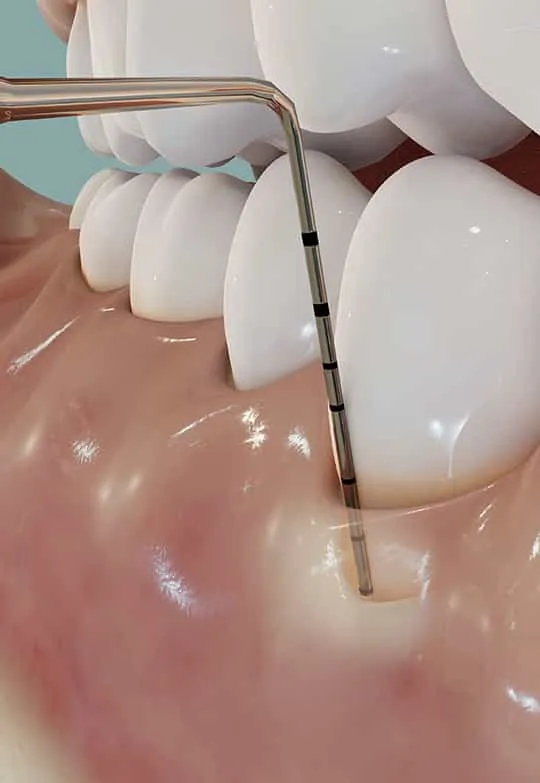
You should never see blood when brushing or flossing your teeth. Bleeding gums are a common sign of gum disease—may be a sign you’ve ignored in the past. But leaving your gum disease untreated can lead to sore gums, bad breath, and tooth loss.
Other signs of gum disease include:
Plaque needs to be removed from your teeth to prevent tooth decay or gum disease from setting in. You may feel or hear some scraping during scaling, but our team is always as gentle as possible.
Also referred to as “deep cleaning,” root planing is a common periodontal therapy that removes built-up plaque below your gum tissue. This is one of the best ways to fight gum disease, but you may feel some discomfort and sensitivity for up to several days after the procedure.
Antimicrobial rinses and traditional scaling has been shown to be effective in treating periodontal disease. With bacteria testing and the appropriate antibacterial therapy, we can remove significantly more of the bacteria, fungus, and biofilm associated with gum disease.
Bacteria testing allows us to select the most appropriate antibiotic rinse, oral antibiotic cream, and/or antibacterial mouthwash to fight a patient’s gum disease. This treatment can provide excellent results to fight the signs and symptoms of periodontal disease, including:
Need a Dental Services?
Begin your Business Growth with
Clinically reviewed by the Palermo Village Dental team. Our dentists are registered with the Royal College of Dental Surgeons of Ontario (RCDSO). Last reviewed November 2026.
Gum disease is an infection of the gums and the bone that holds your teeth, caused by plaque bacteria. The early stage, gingivitis, causes red, bleeding gums and can be reversed with cleanings and better home care. The advanced stage, periodontitis, damages bone and needs deeper treatment such as scaling and root planing, laser therapy and regular maintenance to stop it progressing.
Gum disease is one of the most common reasons adults lose teeth, yet it is often painless until it is advanced. Bleeding when you brush is not normal. It is your gums telling you that bacteria are causing inflammation. The sooner it is treated, the more bone and gum tissue we can protect.
Treatment usually starts with a thorough assessment during a hygiene visit. Mild cases respond to cleanings and home-care changes. Deeper pockets may need scaling and root planing or SOLEA laser gum therapy. If a tooth has already been lost, we can discuss dental implants once the gums are healthy.
| Stage | What you may notice | Typical treatment |
|---|---|---|
| Gingivitis | Red, puffy gums that bleed easily | Cleaning and better home care |
| Early periodontitis | Bleeding, bad breath, pockets 4 to 5 mm | Scaling and root planing |
| Moderate periodontitis | Gum recession, some bone loss | Deep cleaning, laser therapy, maintenance |
| Advanced periodontitis | Loose teeth, shifting, pus | Intensive therapy, possible specialist referral or extraction |
Reduce blood flow to the gums and hide bleeding, so disease progresses quietly.
Raises the risk of gum infection, and gum disease can make blood sugar harder to control.
Pregnancy and menopause can make gums more sensitive.
Some families are more prone to gum disease, even with good home care.
Less saliva means less natural cleaning of the teeth.
Overlaps are harder to clean and trap plaque.
The area is numbed so treatment is comfortable.
Tartar and bacteria are removed from the tooth and root surfaces below the gums.
Root surfaces are smoothed so gums can reattach and bacteria find it harder to stick.
In suitable cases a dental laser helps reduce bacteria and inflamed tissue.
After about six to eight weeks we remeasure the pockets to see how the gums have healed.
Gum disease can be controlled but not cured, so maintenance is essential. Periodontal maintenance visits every three to four months clean the deep pockets that bacteria repopulate, and let us catch any changes early. Between visits, daily cleaning between your teeth is the single most important habit.
Research has linked periodontitis with heart disease, diabetes, stroke and complications in pregnancy. The connection is thought to involve inflammation and bacteria entering the bloodstream. Treating gum disease is good for your mouth and part of caring for your whole body.
Untreated gum disease rarely stays the same. As pockets deepen, bacteria reach further down the root and the bone that supports the tooth slowly breaks down. Gums recede, gaps open between teeth, and teeth may drift, loosen or need to be removed. Replacing lost teeth with implants or bridges is possible, but it is far simpler and more comfortable to protect the teeth you have.
| Without treatment | With treatment and maintenance |
|---|---|
| Pockets deepen and trap more bacteria | Pockets shrink as gums heal and tighten |
| Bone loss continues | Bone loss slows or stops |
| Teeth may loosen and shift | Teeth stay stable for longer |
| Bad breath and bleeding persist | Breath and bleeding usually improve |
| Higher risk of tooth loss | Better chance of keeping natural teeth |
Most private plans cover scaling and root planing, often under basic or periodontal services with an annual limit. The Canadian Dental Care Plan (CDCP) covers scaling and some periodontal treatment for eligible patients, with co-pays based on income and preauthorization in some cases. We bill Sun Life directly. See our CDCP page.
Many people notice less bleeding and fresher breath within two to three weeks of a deep cleaning and better daily care. Gums often tighten over the following weeks as inflammation settles. At your re-evaluation visit we remeasure the pockets so you can see the improvement in numbers, not just feel it.
Gingivitis can be reversed. Periodontitis can be controlled, but lost bone does not usually grow back.
The area is frozen, so most people feel pressure only. Gums may be tender for a few days.
It is often done in two visits, each about an hour.
Bleeding usually means inflammation. It often improves within two weeks of daily flossing.
Yes. Untreated periodontitis is one of the most common reasons adults lose teeth.
Yes. We use the SOLEA laser in suitable cases to support gum treatment.
Usually every three to four months after active treatment.
Most cases are treated here. Advanced cases may be referred to a periodontist.
Yes. Smoking raises the risk and slows healing.
The CDCP covers scaling and some periodontal care for eligible patients. We check coverage first.
This page is general information and is not a diagnosis. Your dentist will recommend treatment after an examination. Reviewed by the Palermo Village Dental team, November 2026.
2525 Old Bronte Rd #290, Oakville, ON L6M 0R4. New and CDCP patients welcome. Read our Google reviews.